

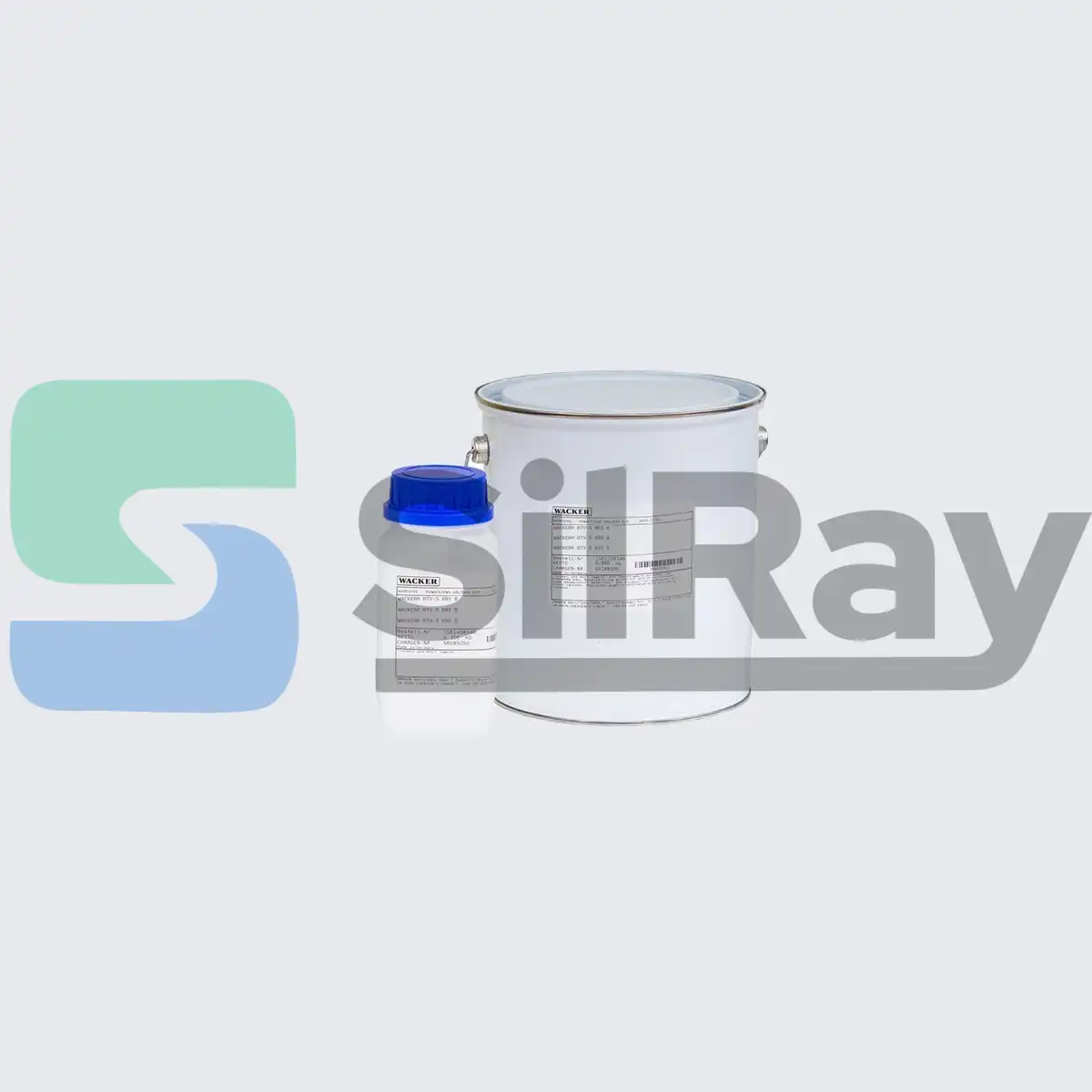


WACKER RTV-S 691 A/B 1kg – silicone for bonding solar cells in space applications
Packaging: 1kg (set: component A + component B)
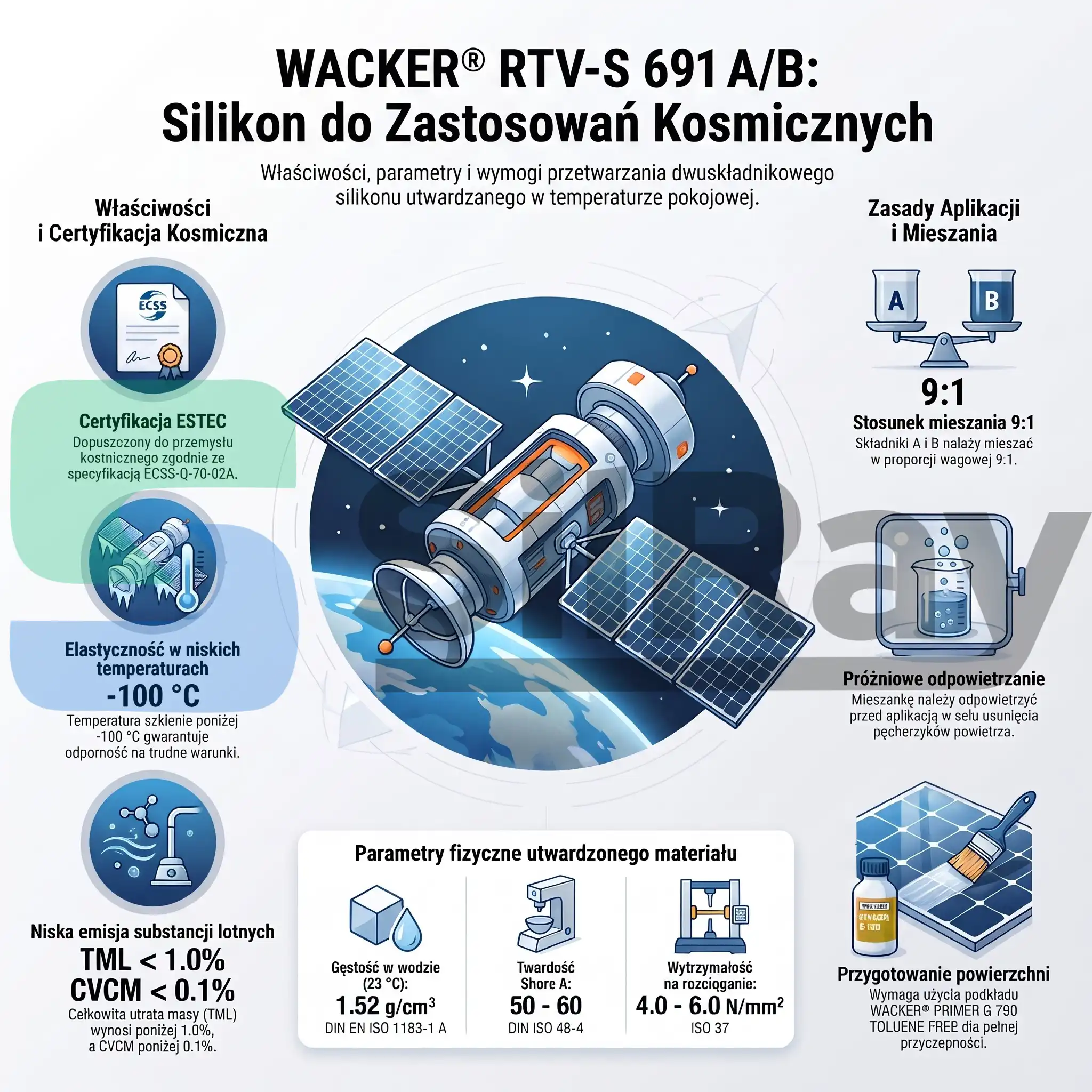
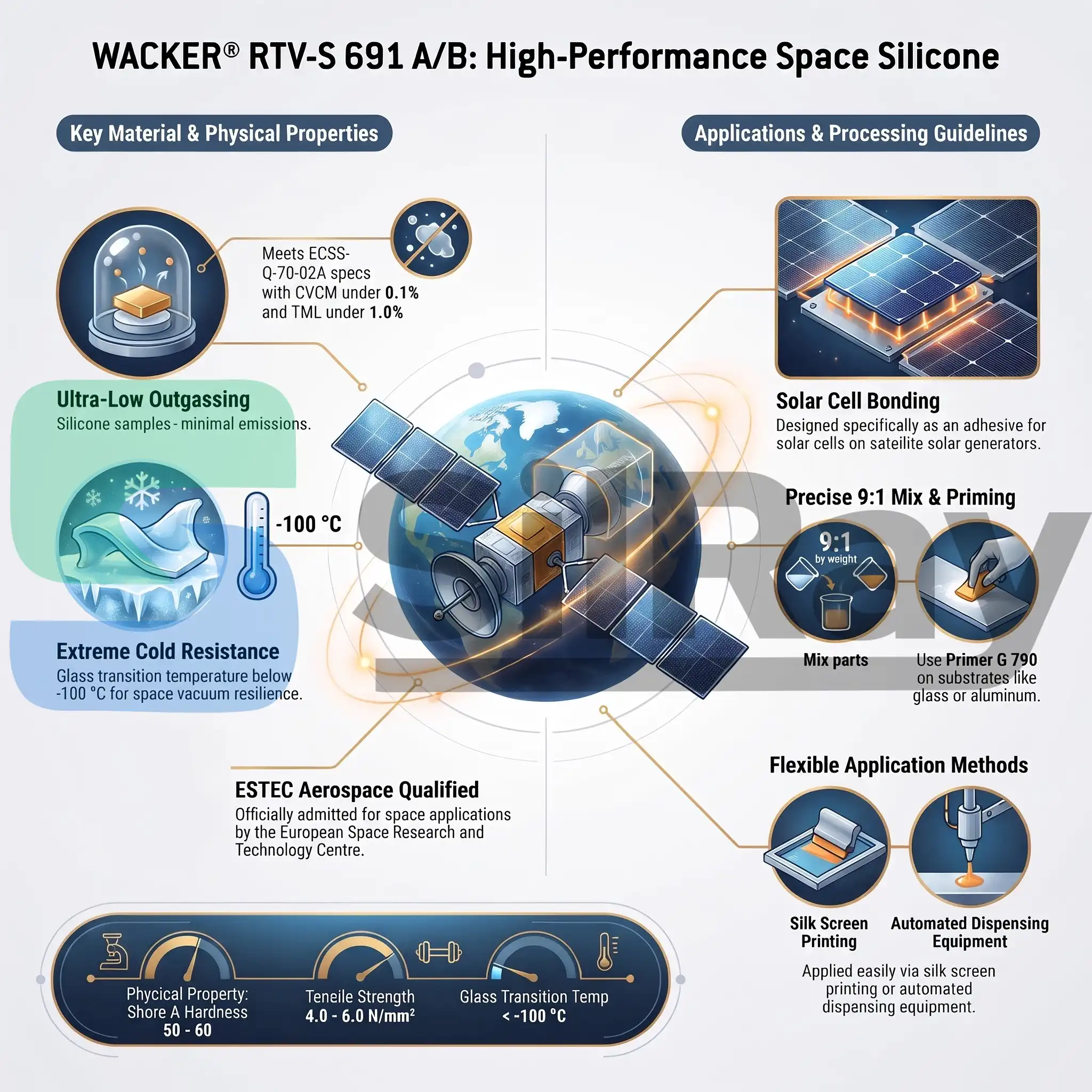
WACKER® RTV-S 691 A/B is a self-leveling, two-component addition-curing RTV-2 silicone with a particularly low content of volatile substances and flexibility at low temperatures (glass transition temperature below −100 °C). It was developed as an adhesive for solar cells in space technology, e.g. in satellites, and is approved by ESTEC in accordance with specification ECSS-Q-70-02A. The mixing ratio A:B is 9:1 by weight and the pot life of the mixture is 90–110 minutes. After curing it has a hardness of 50–60 Shore A. It can be applied by screen printing or with dispensing equipment.
Ask about the product

Product code: RTVS691AB1kg
Specifications
RTV-2 Silicones
- Mix Ratio A:B 9:1
- Color red/colorless
- Hardness above 50 ShA
- UL 94 HB no
- EN 45545-2 no
- Food Contact no
- Special Effects / Prosthetics no
- Pad Printing no
- Mold Making & Casting no
- Electronics Potting no
Description
WACKER® RTV-S 691 A/B is a self-leveling, two-component addition-curing silicone rubber that vulcanizes at room temperature (RTV-2). Thanks to its low emission of volatile substances and its flexibility at low temperatures, it is recommended above all for space applications.
It was developed as an adhesive for solar cells on solar generators in space technology, for example in satellites.
Key properties
-
resistance to low temperatures – glass transition temperature below −100 °C
-
particularly low content of volatile substances
-
approved for aerospace applications by ESTEC (European Space Research and Technology Centre) in accordance with specification ECSS-Q-70-02A (corresponds to the former ESA PSS-01-701)
-
resistance to high temperature and UV radiation
-
flexibility at low temperatures
-
mixing ratio of components A:B is 9:1 by weight
-
pot life of the mixture 90–110 minutes
Applications
WACKER® RTV-S 691 A/B is used as a silicone adhesive with minimal emission of volatile substances in space projects, e.g. for fixing solar cells in satellites. The material can be applied by screen printing or with dispensing equipment.
Processing
Components A and B are mixed in a ratio of 9:1 by weight. Component A must be stirred thoroughly before it is taken from the container. The components can be mixed by hand or with dispensing equipment. Before application, the mixture must be degassed under vacuum to remove entrapped air bubbles.
The platinum catalyst is contained in component A and the crosslinker in component B. Therefore, equipment that has come into contact with component A or with the mixture of both components (mixing vessels, spatulas, stirrers) must not come into contact with component B. All equipment must be clearly labeled. Only components A and B from the same production batch may be processed together.
For the rubber to adhere to other materials (e.g. glass, aluminum, silver, epoxy resin, polyester resin), the surface must first be prepared with WACKER® PRIMER G 790 TOLUENE FREE.
The shelf life is given on the label of each batch. After it has passed, the product is not necessarily unusable, but before use you must check that it still has the properties required for the given application.
Technical data
| Property | Conditions | Value |
|---|---|---|
| Color – component A | – | red |
| Color – component B | – | colorless, clear |
| Density – component A | – | 1.55–1.65 g/cm³ |
| Density – component B | – | 0.98 g/cm³ |
| Dynamic viscosity – component A | 23 °C | 55,000–70,000 mPa·s |
| Viscosity – component B | 25 °C | 200–240 mPa·s |
| Mixing ratio A:B | – | 9:1 by weight |
| Dynamic viscosity of A+B mixture (approx. 5 min after mixing) | 23 °C | 18,000–26,000 mPa·s |
| Pot life of the mixture (up to 200,000 mPa·s) | – | 90–110 min |
| Density after curing | 23 °C | 1.52 g/cm³ |
| Shore A hardness | – | 50–60 |
| Tensile strength | – | 4.0–6.0 N/mm² |
| Elongation at break | – | 100–160 % |
| Modulus at 100 % elongation | 23 °C | 1.33–1.53 N/mm² |
| Tear strength | – | 4.0–10.0 N/mm |
| Volume resistivity | 100 V, 1 min | > 1.0 × 10¹⁴ Ω·cm |
| Surface resistivity | 100 V | > 1.0 × 10¹² Ω |
| Total mass loss (TML) | – | < 1.0 % |
| Collected volatile condensed material (CVCM) | – | < 0.1 % |
The properties after curing were measured after pressing for 5 minutes at 165 °C and post-curing for 6 hours at 100 °C. The values given are indicative and should not be used as the basis for preparing specifications.
Guides
- Minus a hundred degrees and back: why adhesive in orbit must not crack – why solar cell adhesive must stay flexible through thousands of heating and cooling cycles in orbit.
Files to download
 RTVS691-1kg-TDS-en.pdf
48.21 kB
Technical Data Sheet (TDS) – WACKER RTV-S 691 A/B
RTVS691-1kg-A-SDS-en.pdf
231.90 kB
Safety Data Sheet (SDS) component A – WACKER RTV-S 691 A/B
RTVS691-1kg-B-SDS-en.pdf
248.10 kB
Safety Data Sheet (SDS) component B – WACKER RTV-S 691 A/B
Recommended products
-
KONTAKT IPA PLUS 400ml – Isopropyl Alcohol (IPA) Cleaner and Degreaser for Surfaces and Electronics
Price €9.49Price €7.72 -
Bestseller
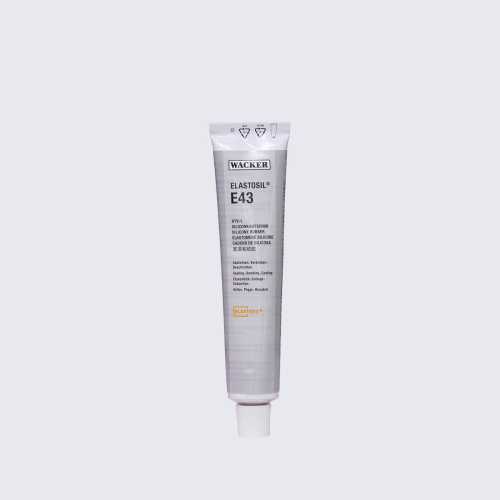
WACKER ELASTOSIL E43 90ml – Transparent Silicone Adhesive and Sealant for Electronics and Assembly, Shore A 30
Price €18.96Price €15.41 -
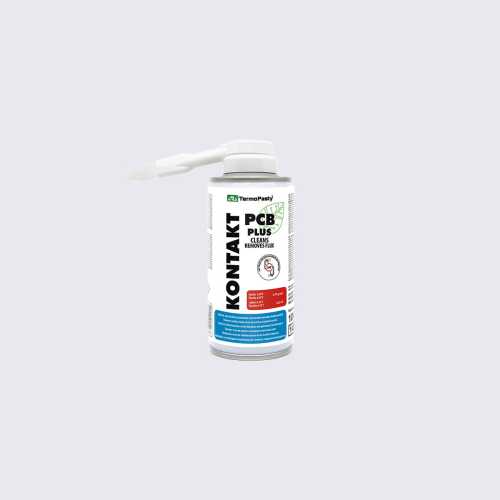
KONTAKT PCB PLUS 100ml – Cleaner and Protector for Printed Circuit Boards (PCB)
Price €7.78Price €6.32 -
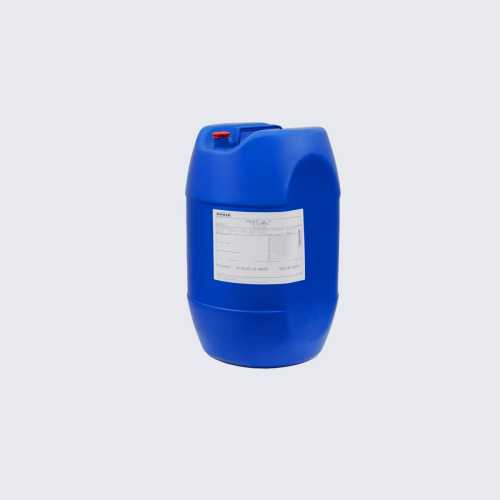
WACKER AK 100 30kg – Silicone Oil for Lubrication, Protection and Industrial Applications, Viscosity 100 mm²/s
Zapytaj o cenę Ask about the product
WACKER AK 100 30kg – Silicone Oil for Lubrication, Protection and Industrial Applications, Viscosity 100 mm²/s -
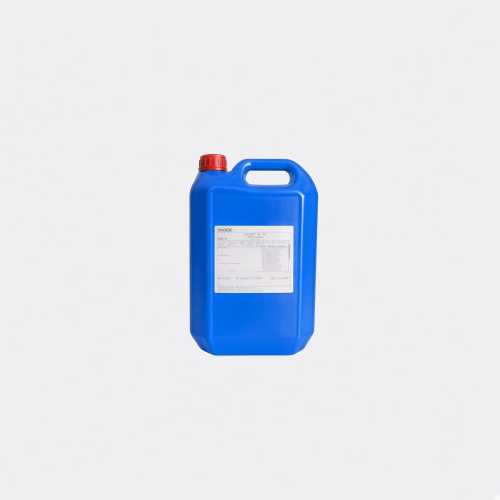
WACKER AK 100 5kg – Silicone Oil for Lubrication, Protection and Industrial Applications, Viscosity 100 mm²/s
Zapytaj o cenę Ask about the product
WACKER AK 100 5kg – Silicone Oil for Lubrication, Protection and Industrial Applications, Viscosity 100 mm²/s -

WACKER SILRES HK46 25kg – High-Temperature Silicone Resin, Heat-Resistant and Non-Stick Binder up to 600°C with Food Contact Compliance
Zapytaj o cenę Ask about the product
WACKER SILRES HK46 25kg – High-Temperature Silicone Resin, Heat-Resistant and Non-Stick Binder up to 600°C with Food Contact Compliance -
Bestseller
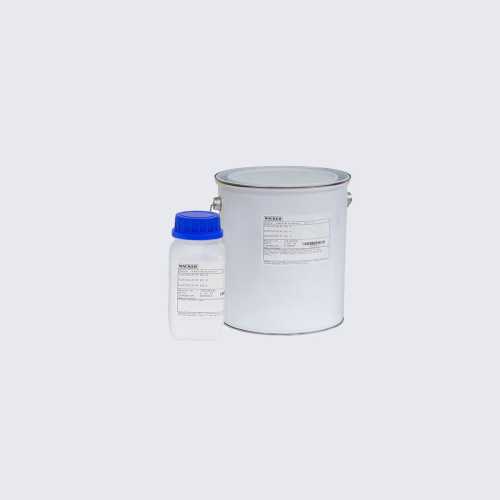
WACKER ELASTOSIL RT 622 A/B 1kg – Silicone for Electronics and Winding Encapsulation, Shore A 27
Price €100.04Price €81.34 -
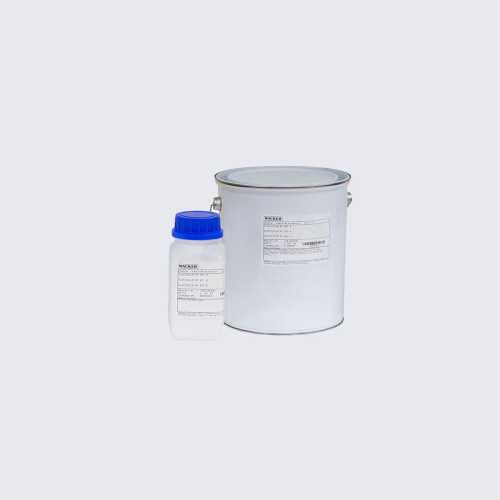
WACKER ELASTOSIL RT 625 A/B 1kg – Silicone for Casting, Electronics Encapsulation and Component Protection, Shore A 25
Price €147.32Price €119.77


