

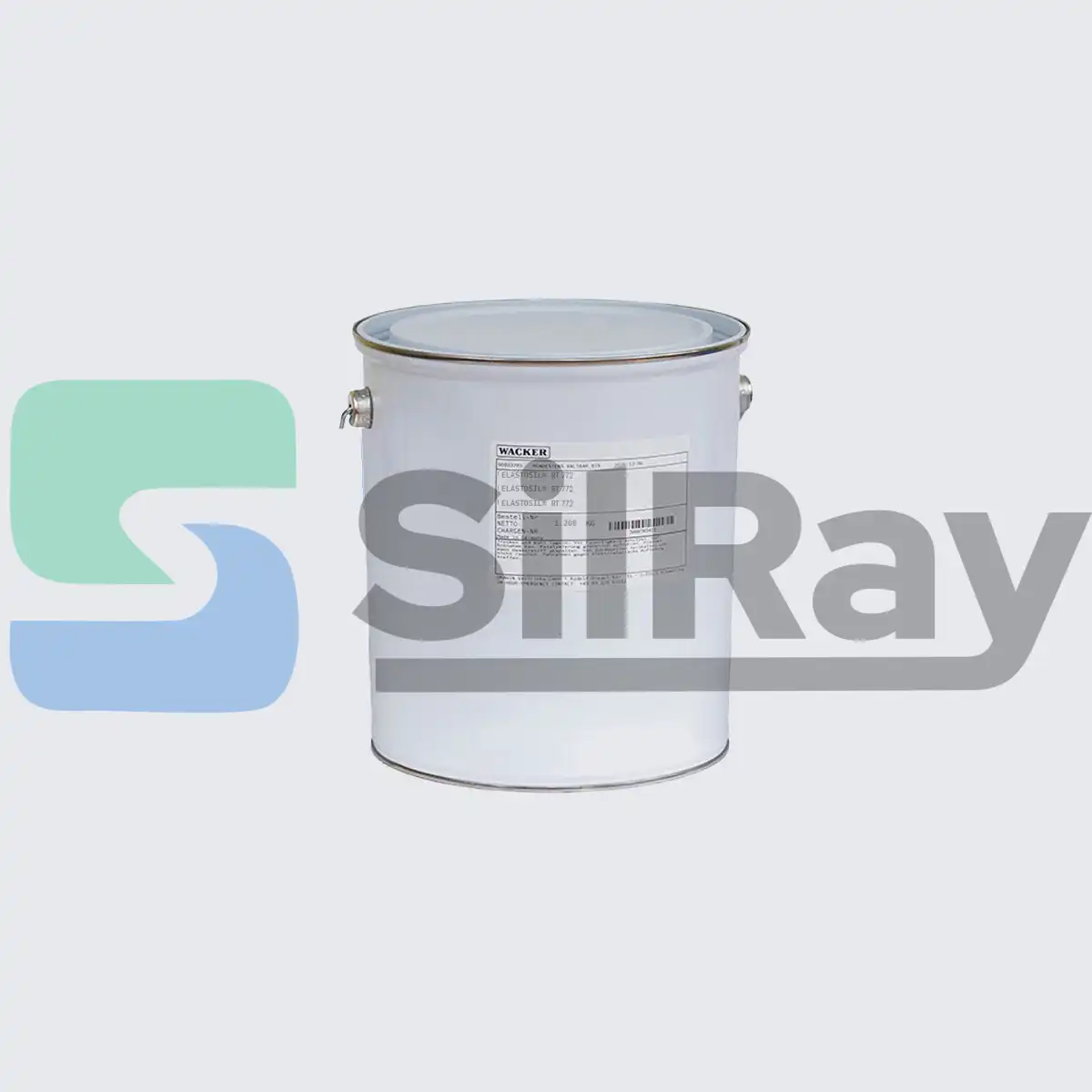


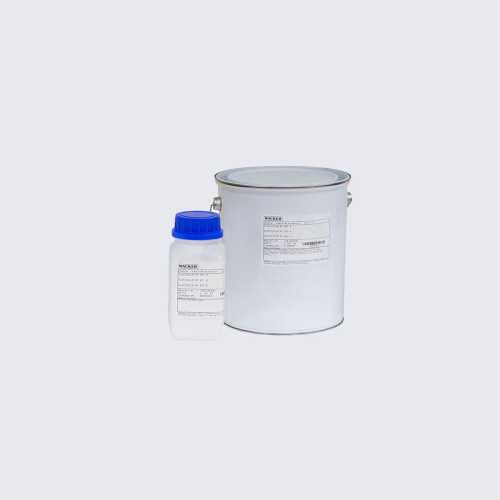
WACKER ELASTOSIL RT 772 1.2 kg – condensation silicone for potting and coating, Shore A 32
ELASTOSIL RT 772 – condensation silicone for pouring and coating
Set: 1.2 kg; recommended proportion with Catalyst T 77 or T 77 PLUS: 10:1 by weight
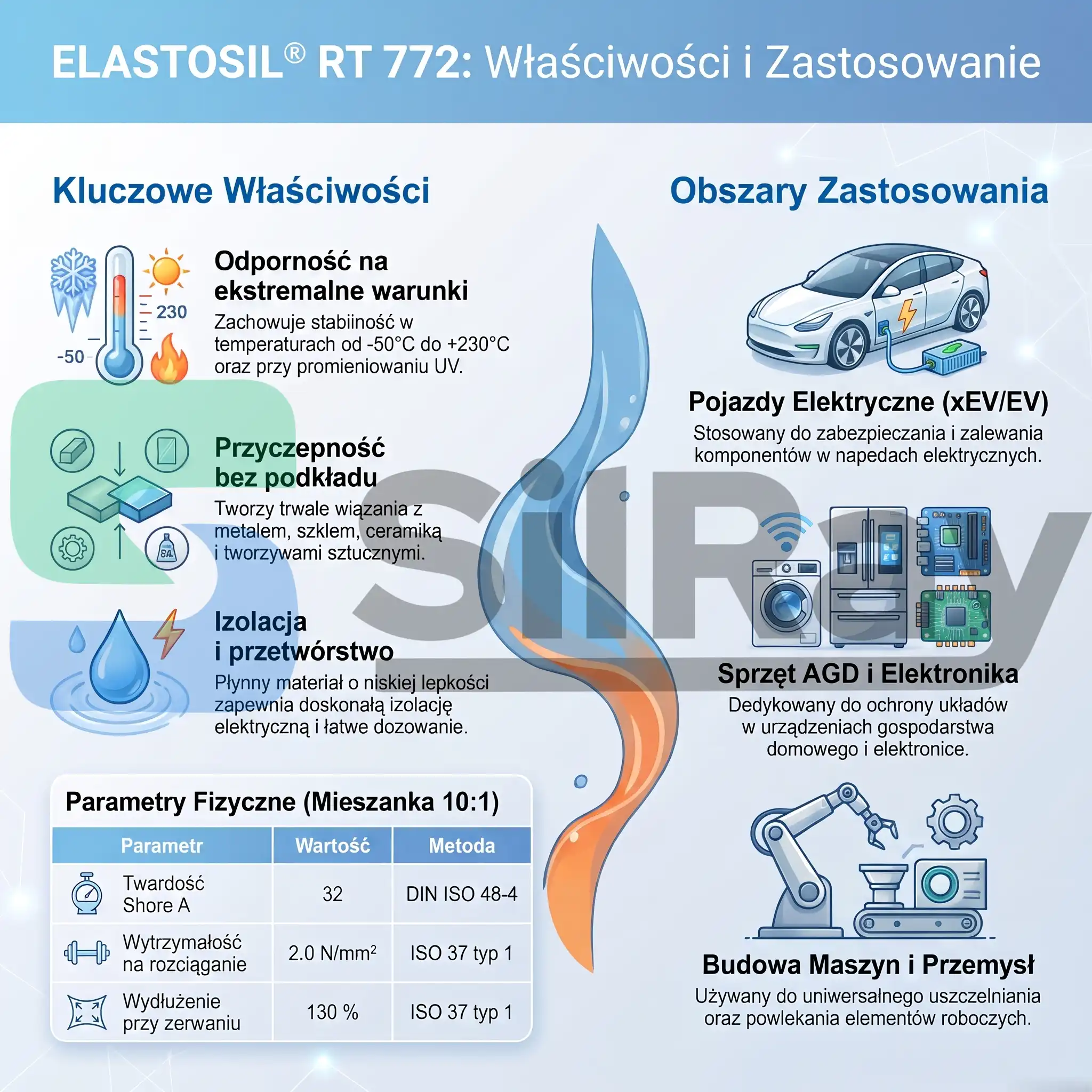
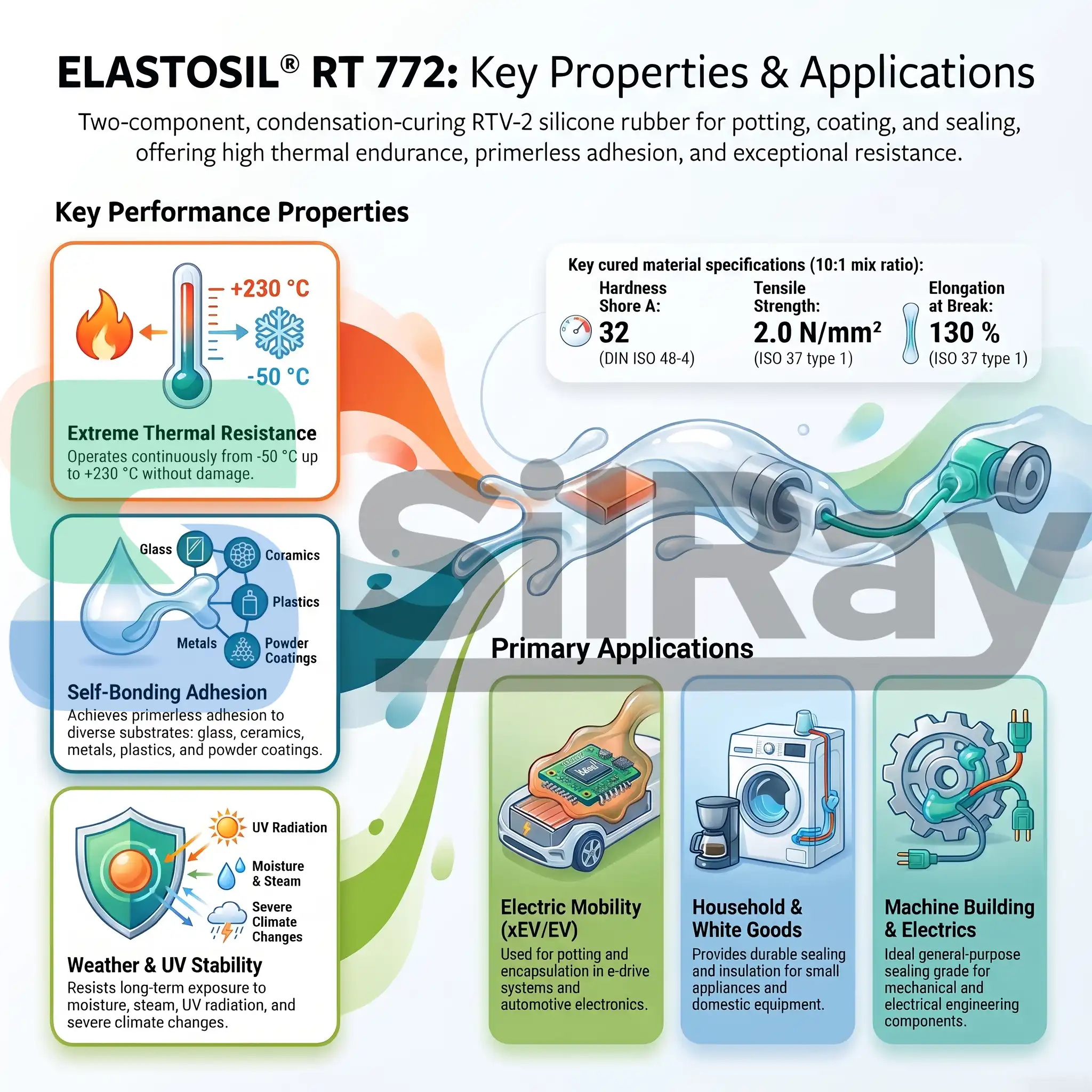
RTV-2 liquid, two-component silicone for potting, coating and sealing. After hardening, it forms a self-adhesive, electrically insulating rubber with a hardness of 32 Shore A, resistant to steam, UV and changing climatic conditions. The recommended operating temperature range is from -50 °C to +230 °C.
Shipping costs are not included in the price.
Shipping costs are not included in the price.
Product code: RT772-1-2kg
Specifications
RTV-2 Silicones
- Mix Ratio A:B 10:1
- Hardness 21–35 ShA
- UL 94 HB yes
- EN 45545-2 no
- Food Contact no
- Special Effects / Prosthetics no
- Pad printing no
- Mould Making & Casting no
- Electronics Potting yes
Description
WACKER ELASTOSIL RT 772 – liquid RTV-2 condensation silicone for pouring and coating
ELASTOSIL RT 772 is a liquid, condensation-curing RTV-2 silicone for potting and coating. When mixed with the hardener from the WACKER Catalyst T 77 series, it creates a durable, self-adhesive silicone rubber of medium hardness.
Properties
-
Fluid consistency, low viscosity and high extrusion efficiency before hardening.
-
Medium or fast curing at room temperature with Catalyst T 77 or very fast with Catalyst T 77 PLUS.
-
Primerless adhesion to many substrates including glass, ceramics, metals, plastics and powder coatings.
-
Electrical insulation properties and resistance to steam, moisture, UV radiation and long-term exposure to changing weather conditions.
-
Exceptional heat resistance and recommended operating temperature range from -50 °C to +230 °C.
-
UL 94 HB after hardening with WACKER Catalyst T 77.
Application
Universal silicone for sealing and pouring, used in household appliances, automotive, electric vehicle drives, machine construction and the electrotechnical industry. Suitable for protecting and insulating elements and for coating surfaces requiring resistance to high temperature, steam and weather conditions.
Processing
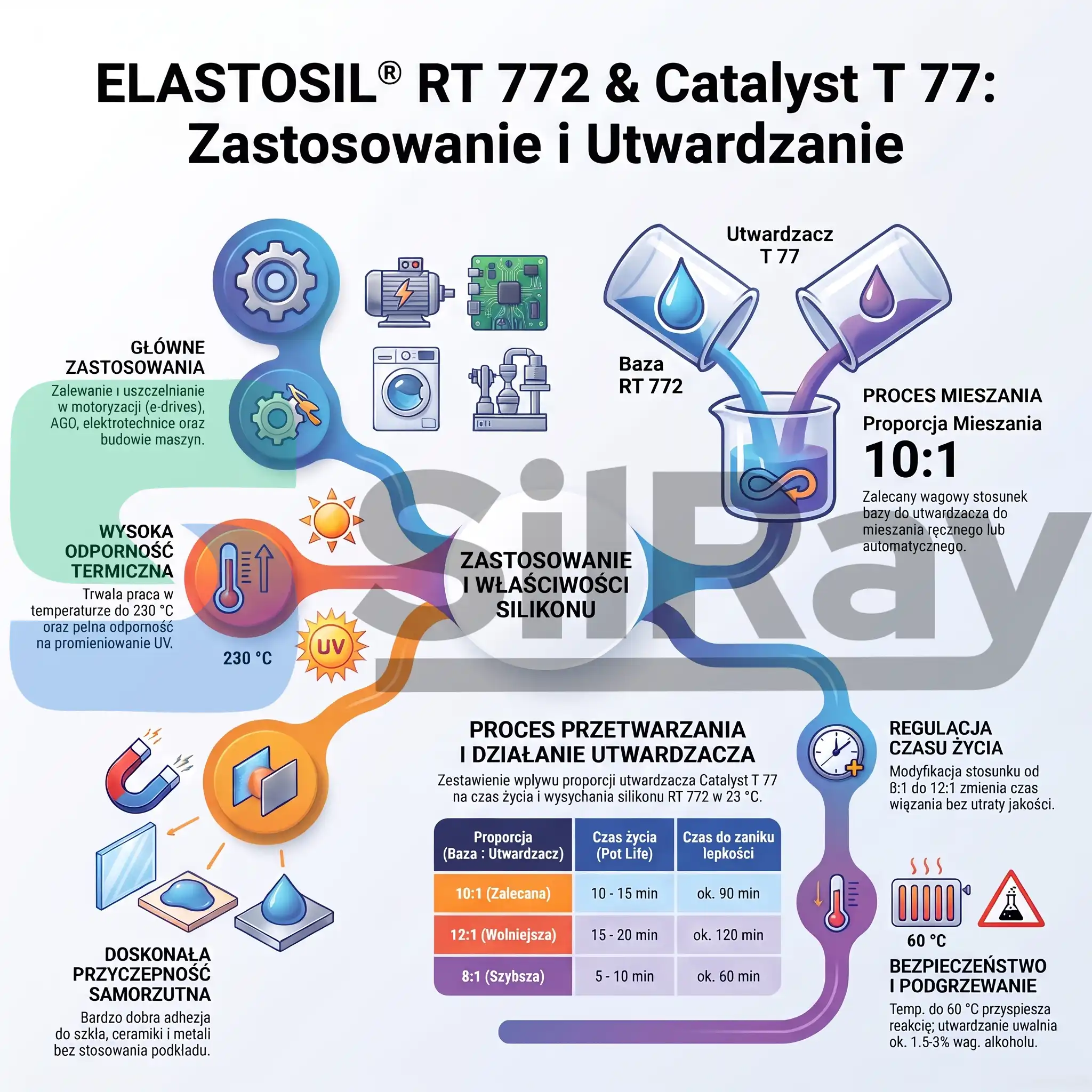
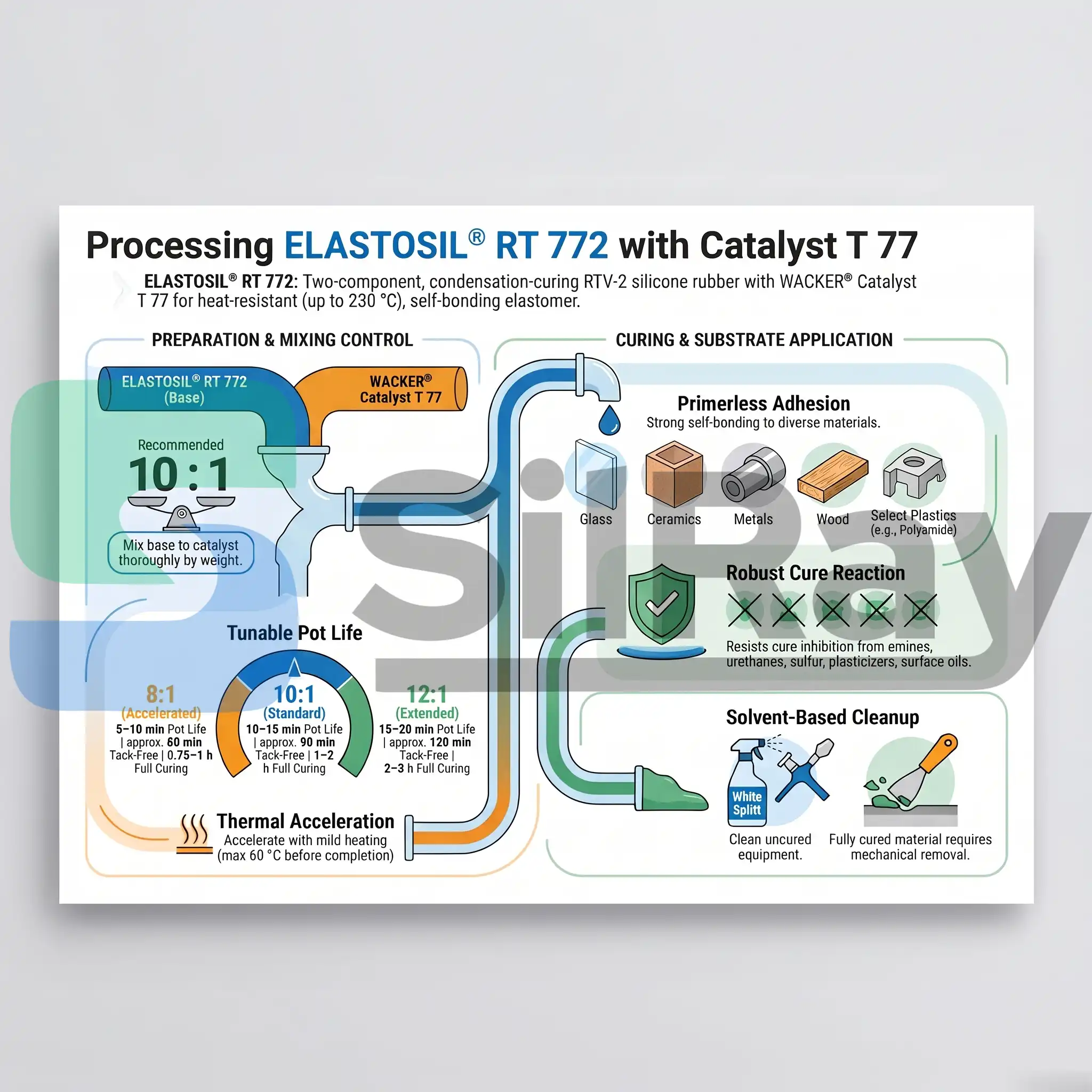
ELASTOSIL RT 772 should be combined with WACKER Catalyst T 77 or WACKER Catalyst T 77 PLUS. Before application, the ingredients must be thoroughly mixed manually or in an automatic dosing line with a static or dynamic mixer. The recommended proportion of base to hardener is 10:1 by weight.
The working time and hardening rate can be adjusted from 8:1 to 12:1. This change usually slightly affects the properties of the hardened rubber. In case of larger deviations, preliminary tests should be performed. Curing can be slightly accelerated by increasing the temperature, but before it is finished it must not exceed 60 °C.
For cleaning machines and dosing devices, the manufacturer recommends white spirit or a similar non-polar solvent, preferably before full hardening. The hardened silicone is removed mechanically, if necessary with a swelling agent. Store the base in a dry and cool place.
Technical data
| Property | Conditions | Value | Method |
|---|---|---|---|
| Color of the base before hardening | – | cream | – |
| Base density | 23 °C | approx. 1.23 g/cm³ | ISO 1183-1 A |
| Dynamic viscosity of the base | 23 °C | approx. 18,000 mPa s | DIN EN ISO 3219 |
| Viscosity of the mixture with Catalyst T 77, 10:1 | 25 °C, 0.5 1/s | approx. 25,000 mPa s | DIN EN ISO 3219 |
| Operating time with Catalyst T 77, 10:1 / 12:1 / 8:1 | 23 °C | 10–15 / 15–20 / 8–10 min | DIN EN ISO 3219 |
| Time to disappear viscosity with Catalyst T 77, 10:1 / 12:1 / 8:1 | 23 °C | approx. 90 / 120 / 60 min | – |
| Operating time with Catalyst T 77 PLUS, 10:1 / 12:1 / 8:1 | 23 °C | 5–10 / 10–15 / 3–5 min | DIN EN ISO 3219 |
| Time to disappear viscosity with Catalyst T 77 PLUS, 10:1 / 12:1 / 8:1 | 23 °C | approx. 45 / 75 / 35 min | – |
| Color after hardening | 10:1 by weight | black | – |
| Density after hardening in water | 23 °C | approx. 1.24 g/cm³ | DIN EN ISO 1183-1 A |
| Hardness Shore A | 14 days, 23 °C, 50% humidity resp., 2 mm plate | 32 | DIN ISO 48-4 |
| Tensile strength | 10:1 by weight | 2,0 N/mm² | ISO 37 type 1 |
| Elongation at break | 10:1 by weight | 130 % | ISO 37 type 1 |
| Recommended operating temperature range | – | from -50 °C to +230 °C | – |
| Flammability class | after hardening with Catalyst T 77 | UL 94 HB | UL 94 |
| Maximum temperature before completion of hardening | – | 60 °C | – |
The values provided are indicative and should not be the basis for creating specifications. Preliminary tests are recommended before use.
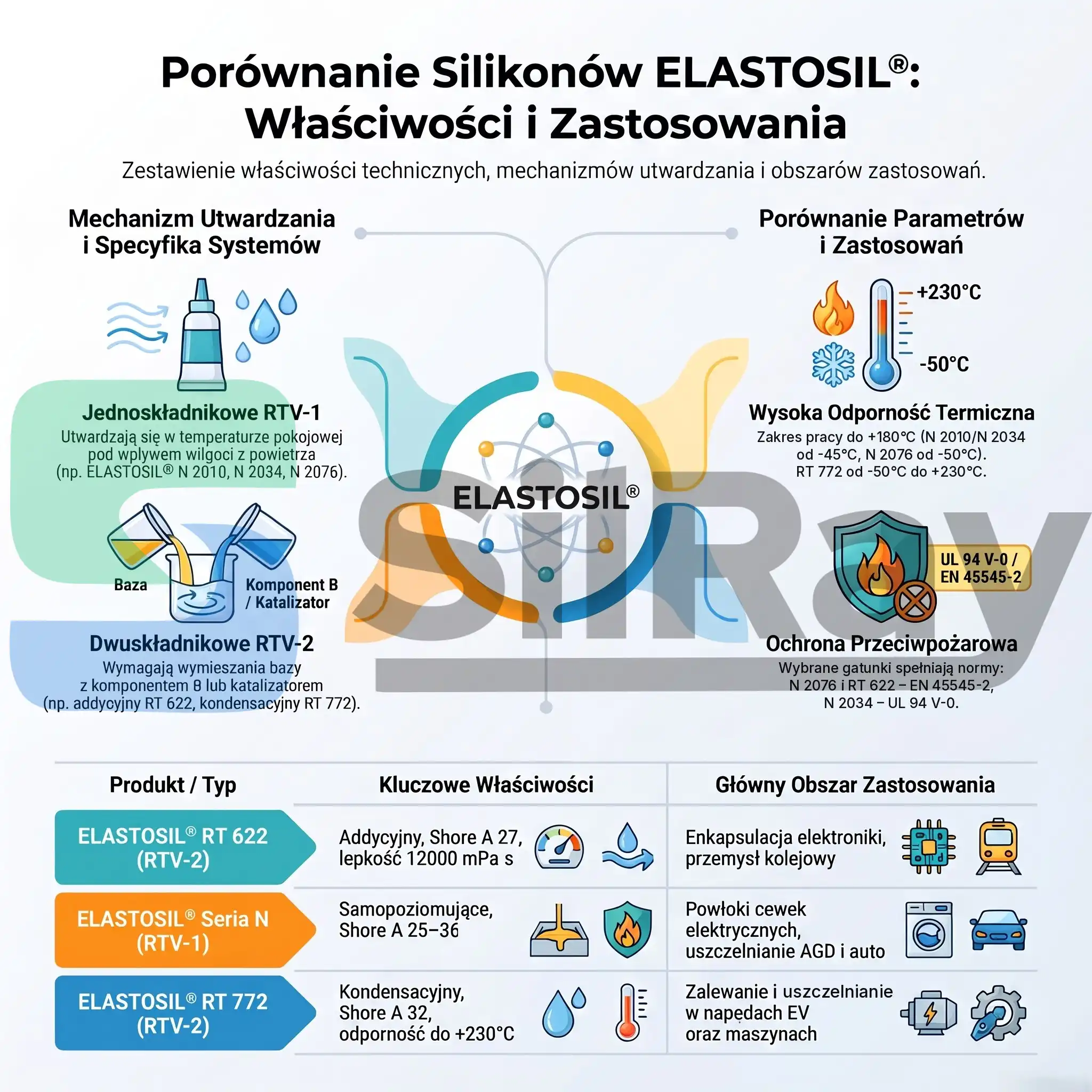
Comparison of ELASTOSIL® silicones
The comparison below applies to the same chemistry in every pack size: N2076 310 ml and N2076 25 kg, N2010 310 ml, N2034 310 ml, RT 622 A/B 1 kg (also 5 kg and 30 kg) and RT 772 1.2 kg. Data that are not given are marked “–”.
| Property | N2076 | N2010 | N2034 | RT 622 A/B | RT 772 |
|---|---|---|---|---|---|
| System | RTV-1, condensation-curing (alkoxy) | RTV-1, alkoxy | RTV-1, alkoxy | RTV-2, addition-curing | RTV-2, condensation-curing |
| Composition / mixing | 1K, ready to use | 1K, ready to use | 1K, ready to use | 2K, 9:1 (A:B, by weight) | 2K, recommended 10:1 with Catalyst T 77 / T 77 PLUS |
| Colour after curing | anthracite | colourless / translucent | black | reddish brown | black (base: cream) |
| Viscosity | 160,000 mPa·s (25 °C, 0.5 s⁻¹); 18,500 mPa·s (25 s⁻¹) | 15,000 mPa·s (0.5 s⁻¹); 10,000 mPa·s (25 s⁻¹) | 30,000 mPa·s (25 °C, 0.5 s⁻¹); 12,500 mPa·s (25 s⁻¹) | 12,000 mPa·s (A+B mix, 23 °C) | approx. 25,000 mPa·s (10:1 mix, 25 °C, 0.5 s⁻¹) |
| Skin formation / pot life | skin formation 5–20 min (23 °C / 50 % r.h.) | skin formation 20 min (23 °C / 50 % r.h.) | skin formation 20 min (23 °C / 59 % r.h.) | pot life 60 min (23 °C, up to 60,000 mPa·s) | pot life 10–15 min (T 77, 10:1, 23 °C); 5–8 min (T 77 PLUS, 10:1) |
| Curing | 1.5 mm/d (23 °C / 50 % r.h.) | – | – | 24 h at 23 °C | tack-free time approx. 90 min (T 77, 10:1, 23 °C) |
| Shore A hardness | 36 | 25 | 35 | 27 | 32 |
| Tensile strength | 1.6 N/mm² | 1 N/mm² | 2 N/mm² | 6.5 N/mm² | 2.0 N/mm² |
| Elongation at break | 150 % | 200 % | 200 % | 550 % | 130 % |
| Density after curing | 1.3 g/cm³ | 1.01 g/cm³ | 1.16 g/cm³ | 1.13 g/cm³ | 1.23 g/cm³ |
| Recommended service temperature range | −50 °C to +180 °C | −45 °C to +180 °C | −45 °C to +180 °C | – | −50 °C to +230 °C |
| Fire standards / LOI | EN 45545-2: R22 HL1–HL2, R23/R24 HL1–HL3; LOI 36 % | – | UL 94 V-0 | EN 45545-2:2020: R22 HL1, R23/R24 HL1–HL2 | UL 94 HB (with Catalyst T 77) |
| Typical applications | coil coating, potting of electrical devices, railways | general-purpose potting and coating | sealing and bonding, FIPG (e.g. automotive lamps) | potting of electronics and windings, railways | potting, coating and sealing; household appliances, automotive, machinery |
For N2010 and N2034 the recommended range is −45…+180 °C; flexibility from −50 °C is also stated for these products. No operating temperature range is given for RT 622. “–” means the value is not given.
How to choose: N2076 when the EN 45545-2 railway standard is required for coil coating; N2010 as a colourless, general-purpose RTV-1; N2034 when UL 94 V-0 is required; RT 622 for deep potting of windings with EN 45545-2; RT 772 when service up to +230 °C is needed.
Guides
- Potting Electronics: Silicone Gel or RTV-2 Compound? - choosing a material for protection and insulation of electronics.
- Processing Silicone Elastomers in Industry: A Guide and Common Mistakes - mixing, venting and curing without surprises.
Files to download
 RT772-TDS-en.pdf
50.46 kB
Technical Data Sheet (TDS) – WACKER ELASTOSIL RT 772
RT772-SDS-en.pdf
279.30 kB
Safety Data Sheet (SDS) – WACKER ELASTOSIL RT 772
RT772-PCS-en.pdf
86.30 kB
Product Safety Data Sheet (PCS) – WACKER ELASTOSIL RT 772
Recommended products
-
KONTAKT IPA PLUS 400ml – Isopropyl Alcohol (IPA) Cleaner and Degreaser for Surfaces and Electronics
Price £7.93Price £6.45 -
Bestseller
WACKER ELASTOSIL E43 90ml – Transparent Silicone Adhesive and Sealant for Electronics and Assembly, Shore A 30
Price £15.85Price £12.88 -
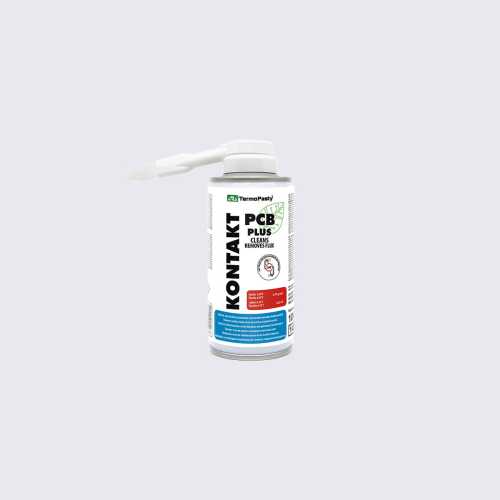
KONTAKT PCB PLUS 100ml – Cleaner and Protector for Printed Circuit Boards (PCB)
Price £6.50Price £5.28 -
WACKER AK 100 30kg – Silicone Oil for Lubrication, Protection and Industrial Applications, Viscosity 100 mm²/s
Zapytaj o cenę Ask about the product
WACKER AK 100 30kg – Silicone Oil for Lubrication, Protection and Industrial Applications, Viscosity 100 mm²/s -
WACKER AK 100 5kg – Silicone Oil for Lubrication, Protection and Industrial Applications, Viscosity 100 mm²/s
Zapytaj o cenę Ask about the product
WACKER AK 100 5kg – Silicone Oil for Lubrication, Protection and Industrial Applications, Viscosity 100 mm²/s -

WACKER SILRES HK46 25kg – High-Temperature Silicone Resin, Heat-Resistant and Non-Stick Binder up to 600°C with Food Contact Compliance
Zapytaj o cenę Ask about the product
WACKER SILRES HK46 25kg – High-Temperature Silicone Resin, Heat-Resistant and Non-Stick Binder up to 600°C with Food Contact Compliance -
Bestseller
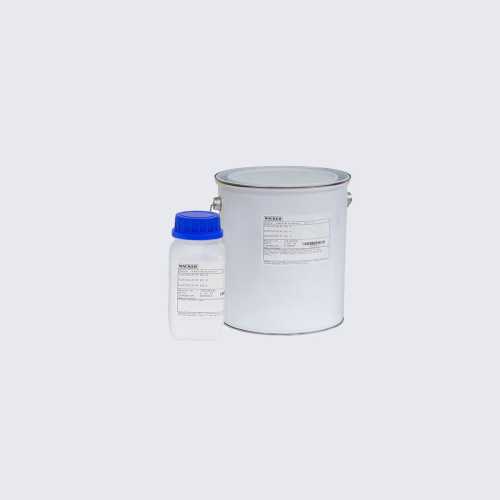
WACKER ELASTOSIL RT 622 A/B 1kg – Silicone for Electronics and Winding Encapsulation, Shore A 27
Price £83.61Price £67.98 -
WACKER ELASTOSIL RT 625 A/B 1kg – Silicone for Casting, Electronics Encapsulation and Component Protection, Shore A 25
Price £123.13Price £100.10


