

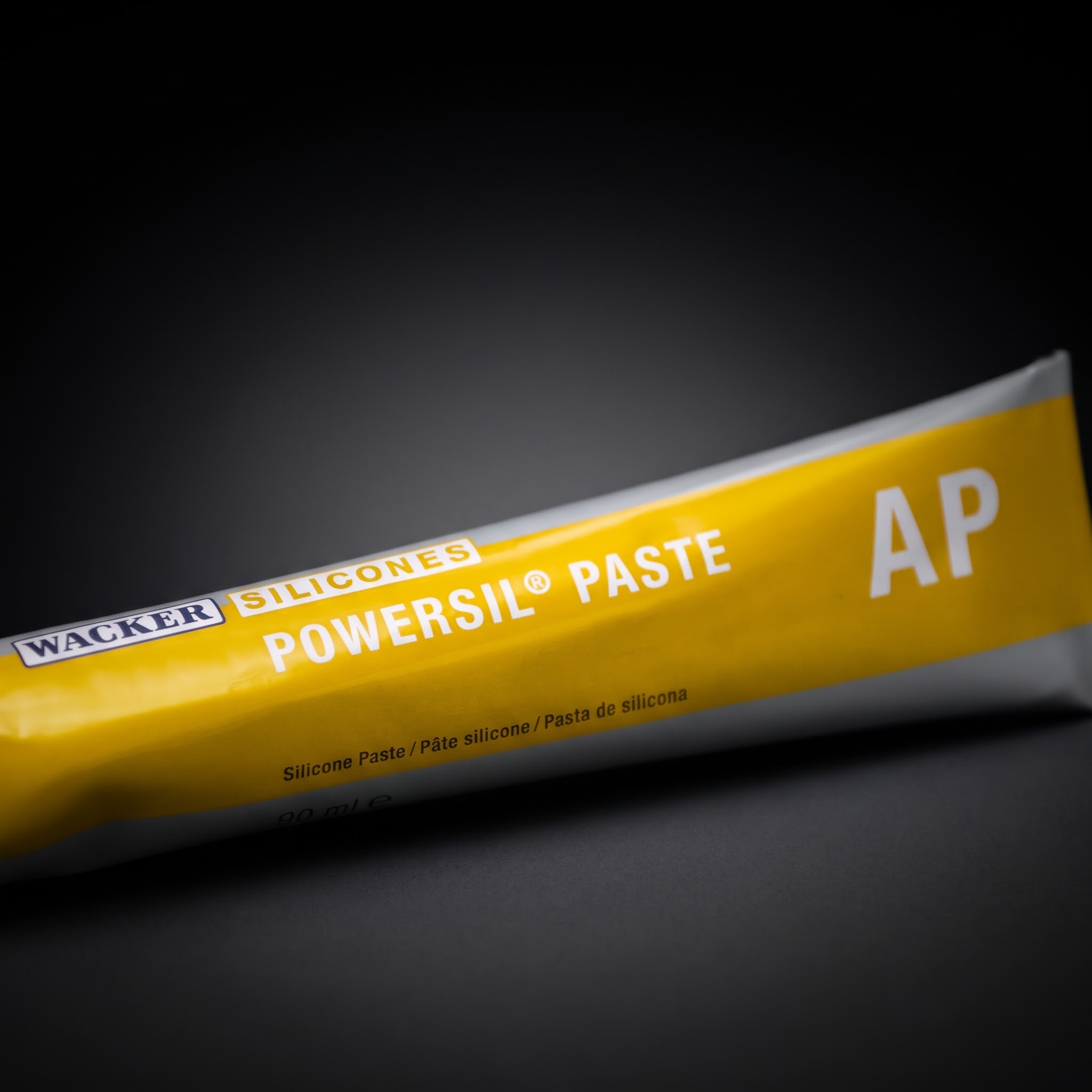
Cable joints, terminations, plugs and connectors work in harsh conditions: in manholes, tunnels, switchrooms and outdoors. Even the best-made accessory can fail if moisture gets into it during installation or in service. Below we explain why moisture is so dangerous for cable connections and what role WACKER POWERSIL® Paste AP can play in protecting them.
Why moisture harms cable accessories
The insulation of the cable and its accessories is meant to keep a live connection operating safely. When water appears at the connection, it can be dangerous for several reasons:
- water and the contaminants it carries impair insulating properties on the contact surfaces between components;
- in micro-gaps and air spaces between the cable and the fitted component, moisture can accumulate and remain for a long time;
- prolonged dampness promotes discharges and, as a result, damage to the accessory and power outages;
- on exposed metal parts, such as conductor ends and connectors, moisture can accelerate corrosion.
That is why, besides careful installation, it also matters what we use to protect the contact surfaces and the places exposed to water ingress.
What POWERSIL® Paste AP is
POWERSIL® Paste AP from WACKER is a non-curing silicone paste of medium consistency, intended for uses including cable accessories, that is, joints, terminations, plugs and connectors. Key features of the paste:
- does not cure, so it stays soft and pliable after application;
- is water-resistant and hydrophobic, meaning it repels water instead of absorbing it;
- has a dielectric strength of 20 kV/mm;
- has an operating temperature range of −40 to +200 °C;
- is based on phenyl silicone oil and practically does not cause swelling of silicone elastomers;
- has good sliding properties, which makes it easier to fit components.
Where to use the paste on joints and terminations
POWERSIL® Paste AP is useful above all in three situations.
Contact surfaces between components
The paste does not cure, so at the interface between the cable and the fitted component it stays soft and pliable. It also has good electrical insulating properties, and its dielectric strength is 20 kV/mm.
Fitting components onto the cable
Silicone components such as flexible sleeves, caps or seals can be difficult to fit onto a cable, especially at larger diameters. The good slip of the paste makes them easier to slide on and helps reduce the effort during installation. The paste practically does not cause swelling of silicone elastomers, so it can be used with such components.
Protection against moisture
A hydrophobic, water-resistant layer of paste helps limit the ingress of moisture into the connection points. The operating temperature range is −40 to +200 °C. Remember, however, that the paste supplements, rather than replaces, the seals and solutions provided by the manufacturer of the given accessory.
How to apply the paste: general rules
It is worth following a few basic rules:
- Safety: work on cables only on an installation that is de-energized and secured in accordance with health and safety regulations and company procedures.
- Accessory instructions: the order of operations, the extent of lubrication and the permitted materials are specified by the manufacturer of the joint or termination. Those instructions always take precedence.
- Clean surfaces: before applying the paste, clean the cable and the accessory components of dirt and moisture.
- A thin, even layer: apply the paste as you would a lubricant, not in excess. Excess paste is unnecessary and makes it harder to keep the installation area clean.
- Inspection: after installation, remove excess paste and check that no contamination has got into it.
What to watch out for
- Organic elastomers: the paste is well tolerated by most rubbers and elastomers, but with some organic elastomers it may cause slight swelling. If the accessory contains such components, run a compatibility test first.
- Preliminary tests: before use, check in preliminary tests whether the paste is suitable for the specific application. The values given are indicative and do not constitute a specification.
- Storage: store the paste in a dry, cool place and close the container tightly after use. You will find the expiry date on the label.
90 ml or 0.95 kg pack?
The choice of pack depends mainly on the scale of the work:
- POWERSIL® Paste AP 90 ml is the one to choose for trials, single installations and minor service jobs;
- POWERSIL® Paste AP 0.95 kg is the one to choose when you use the paste regularly, for many connections or as part of planned maintenance work.
Need help choosing?
See the POWERSIL® Paste AP product page, read the guide to how the P, P12 and POWERSIL® AP pastes differ, or browse the whole category: WACKER silicone pastes. If you have questions about choosing a paste for your accessories, contact us. We will be happy to help.