

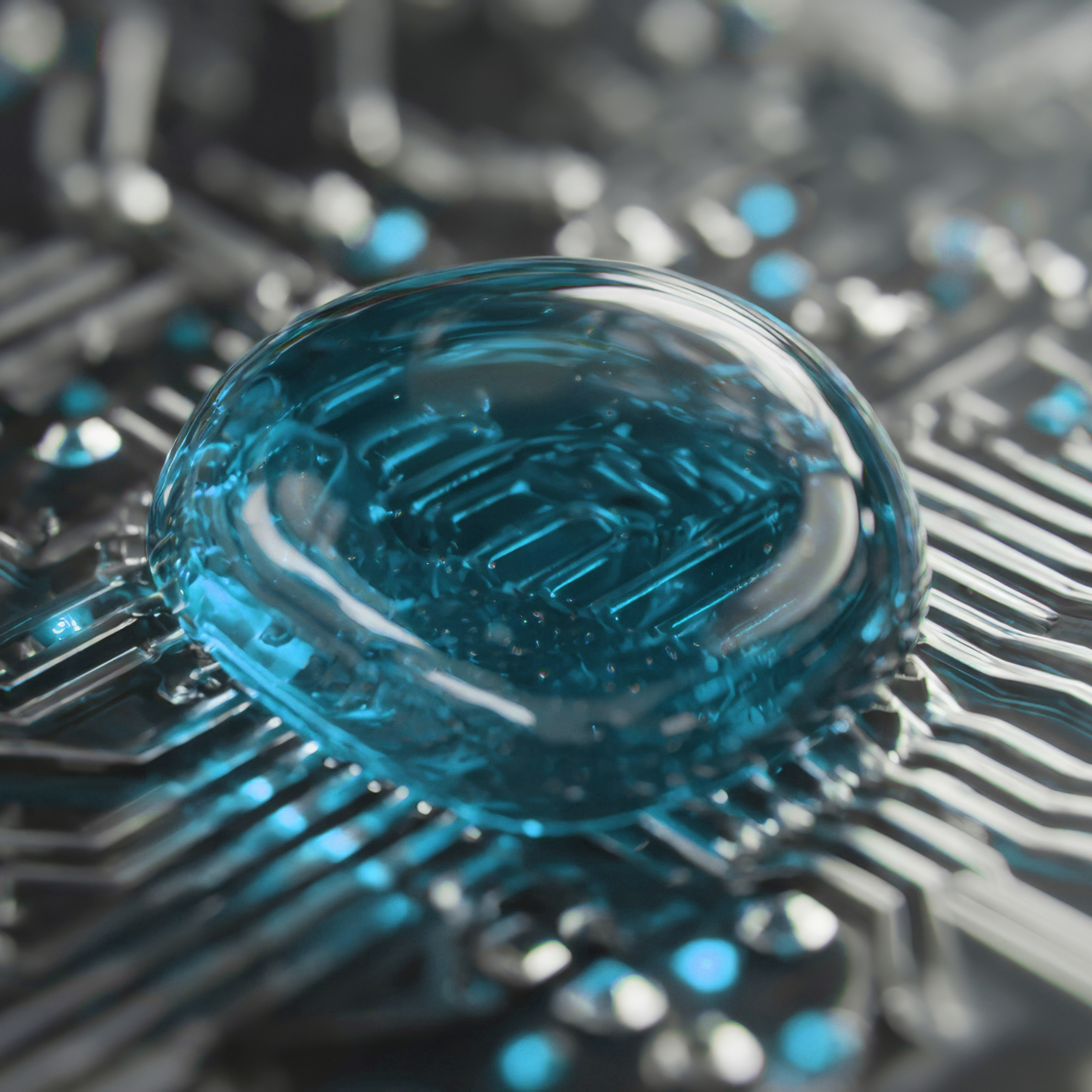
Modern electronics is evolving faster than ever before. Devices are becoming smaller, more powerful, and are required to operate under far more demanding conditions than just a decade ago. Increasing power density, ongoing miniaturization, and exposure to vibration, moisture, and rapid temperature fluctuations mean that traditional methods of component protection are no longer sufficient. This is where silicone gels demonstrate their advantage—a material that, although soft and almost jelly-like, provides a level of protection unmatched by any other elastomers.
For many engineers and designers, silicone gels have become an indispensable element in the design of electronic, power, and industrial systems. Their strength does not lie in hardness, but in their physicochemical properties, which make them an almost ideal protective material. The gel structure is exceptionally flexible—loosely crosslinked, stress-free, and capable of compensating for differences in thermal expansion between dissimilar materials. Where other materials crack or begin to work against the component, silicone gel naturally yields and absorbs the load.
As a result, silicone gels perform exceptionally well not only under vibration and mechanical shock, but also during rapid temperature changes. Standard grades retain their full properties from –50°C to +200°C, while special formulations can operate at temperatures as extreme as –100°C to +210°C. At the same time, WACKER silicone gels remain chemically pure—especially in the SEMICOSIL® product lines, where metal ion content can be below 2 ppm. This is a critical feature for the semiconductor industry, high-voltage systems, and applications with extremely demanding insulation requirements.
This is why silicone gels are used virtually wherever reliability is a top priority. In electronics, they protect PCBs, power modules, controllers, and sensors, ensuring stable operating conditions regardless of the environment. In power engineering and energy transmission, they act as insulating and damping barriers in components that must withstand severe environmental stress for many years. In photovoltaics, they protect junction boxes and sensitive elements against degradation caused by UV radiation and moisture. In microelectronics, they form the foundation of protection for high-power systems, where even a single failure can lead to significant losses.
WACKER offers an exceptionally broad portfolio of silicone gels, ranging from classic ultra-soft materials to specialized grades with high thermal resistance or enhanced mechanical strength. These include low-viscosity gels for highly precise potting, versions resistant to fuels and aggressive chemical media, as well as so-called “tough gels” that combine the softness of a gel with the robustness of an elastomer. This diversity allows manufacturers to select a material perfectly matched to their specific process—from high-volume automated production to individual service applications.
Another key advantage of WACKER gels is their modular curing system, which provides full control over curing speed and process behavior. Manufacturers can choose slow, accelerated, or very fast curing, and in selected systems even take advantage of UV technology, which allows a finished structure to be achieved in just a few minutes. For many companies, this is the key to optimizing production cycle times and achieving outstanding process repeatability.
It is no coincidence that WACKER silicone gels are used in the world’s most demanding industries. Their electrical properties remain stable for years, and their resistance to moisture and aging means that components protected by gel often operate longer than originally anticipated by designers. These are materials that not only protect electronic systems, but genuinely extend their service life. This is precisely why silicone gels hold an important place in the SILRAY portfolio—we know they are the foundation of reliable, long-lasting electronic and industrial systems.
In a world where reliability and technological safety are becoming key differentiators, silicone gels prove that a soft material can form the toughest protective barrier. If you need support in selecting the right gel for your application—from controllers and PV modules to power electronics—the SILRAY team will be happy to advise and help you choose the optimal solution.
 Log in with Facebook
 Log in with Google