

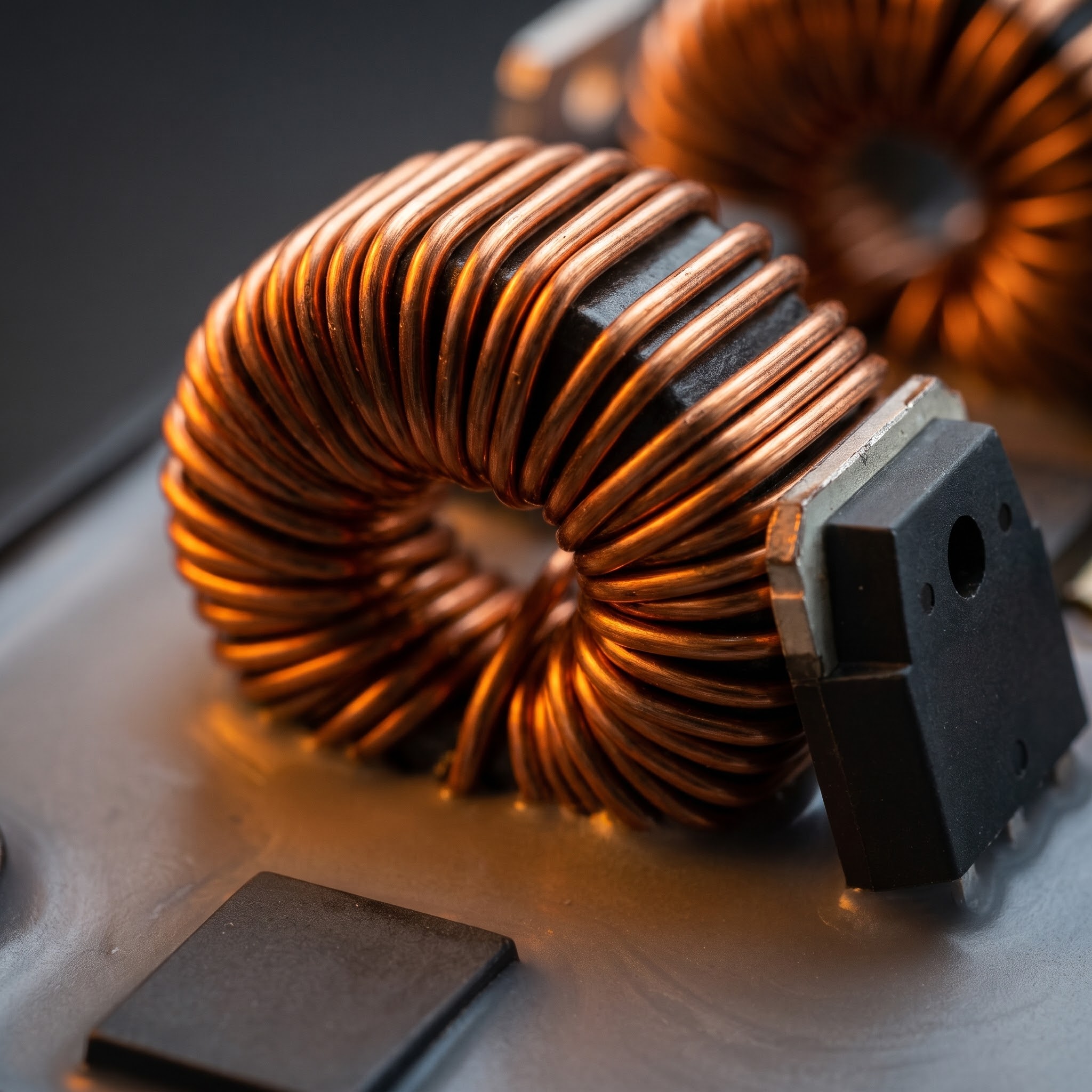
The miniaturization of electronic circuits, increasing power density, and the development of the electromobility (EV) sector mean that engineers today face one main enemy: heat. Ensuring adequate mechanical protection for printed circuit boards (PCBs) is only half the battle. The real challenge is the optimal heat dissipation from electronics.
The choice of the right RTV-2 silicone potting compound is crucial here. Two popular industrial silicones by WACKER – ELASTOSIL RT 628 and ELASTOSIL RT 675 – although similar at first glance, are designed to solve completely different thermal problems. Which one will work best for your project?
The problem of overheating electronics – why a "standard" potting compound isn't enough
Enclosing an electronic circuit in a sealed housing protects it from moisture, dust, and vibrations. However, the air trapped inside acts as an insulator, retaining the heat generated by processors, coils, or transistors. Using a standard silicone potting compound eliminates empty air voids, but it does not always solve the problem of temperature accumulation. This is where engineers' decision paths diverge.
ELASTOSIL RT628: A reliable shield and high thermal resistance
ELASTOSIL RT 628 is a hard (Shore A 54), self-leveling silicone potting compound renowned for its uncompromising mechanical protection. It forms a solid "shell" that perfectly stabilizes heavy components and protects the company's know-how from reverse engineering (as it is opaque).
How does RT 628 handle temperature?This silicone exhibits excellent heat resistance. It can operate continuously at temperatures up to 180°C without losing its physical properties, cracking, or hardening.
The catch: RT 628 is a thermal insulator. This means that the silicone itself will not degrade under the high temperatures from a hot coil, but it will also not dissipate this heat to the outside. This phenomenon can be compared to putting a component into a perfect thermos.
When to choose RT 628?
-
In systems that do not generate large amounts of their own heat.
-
When the device operates in a hot external environment (e.g., engine compartments) and the silicone simply needs to survive these conditions.
-
When the priority is rigidity, impact protection, and concealing the PCB layout.
ELASTOSIL RT 675: Active heat dissipation (Thermal Management)
Where RT 628 becomes a "thermos," ELASTOSIL RT 675 comes into play. It is a specialized, thermally conductive RTV-2 silicone designed for active thermal management.
Thanks to advanced fillers (often aluminum oxide-based), the structure of RT 675 not only withstands high temperatures but, above all, absorbs heat from hot components and instantly transfers it to a heat sink or external aluminum housing.
When to choose RT 675?
-
In high-power supplies, inverters, and transformers.
-
In battery modules and control systems in electric vehicles (EVs).
-
In modern high-power LED lighting (e.g., street or industrial lighting), where diodes would quickly degrade without proper cooling.
ELASTOSIL RT 628 vs RT 675 – key differences at a glance
To help you optimize your production process, we've put together a short summary:
| Feature | ELASTOSIL RT 628 | ELASTOSIL RT 675 |
|---|---|---|
| Main function | Rigid mechanical protection | Heat dissipation (Thermal Management) |
| Response to heat | Highly resistant (does not degrade up to 180°C) | Thermally conductive (transfers heat outward) |
| Applications | Standard PCB modules, sensors, industrial electronics | Power supplies, automotive (EV), LED drivers, high-power coils |
| Hardness / IP protection | High | Very high |
Choose wisely to ensure the longevity of your electronics
The choice of the right industrial chemicals directly translates into the reliability of the final product. If your system needs physical armor resistant to a hot environment, ELASTOSIL RT 628 will be a reliable and cost-effective choice. However, if the electronics themselves generate massive amounts of heat that you must safely dissipate from the system, investing in the thermally conductive ELASTOSIL RT 675 is the only way to prevent failure.
Looking for the right silicone potting compound for your production line?Selecting the right material can be difficult. Contact our team of specialists – we will help you match the appropriate viscosities, curing times, and thermal parameters of WACKER silicones to the specifics of your project and technological requirements:
info@silray.pl