

ELASTOSIL® E41, E43 and E43 N look almost the same: transparent, one-component, cured by atmospheric moisture. In use, however, they behave quite differently. The first flows and self-levels, the second lays down into an even, highly extensible joint, and the third holds its shape on vertical surfaces and can come into contact with food. We show where these differences come from and how to match the silicone to the job, and at the end we bring the key parameters together in a single table.
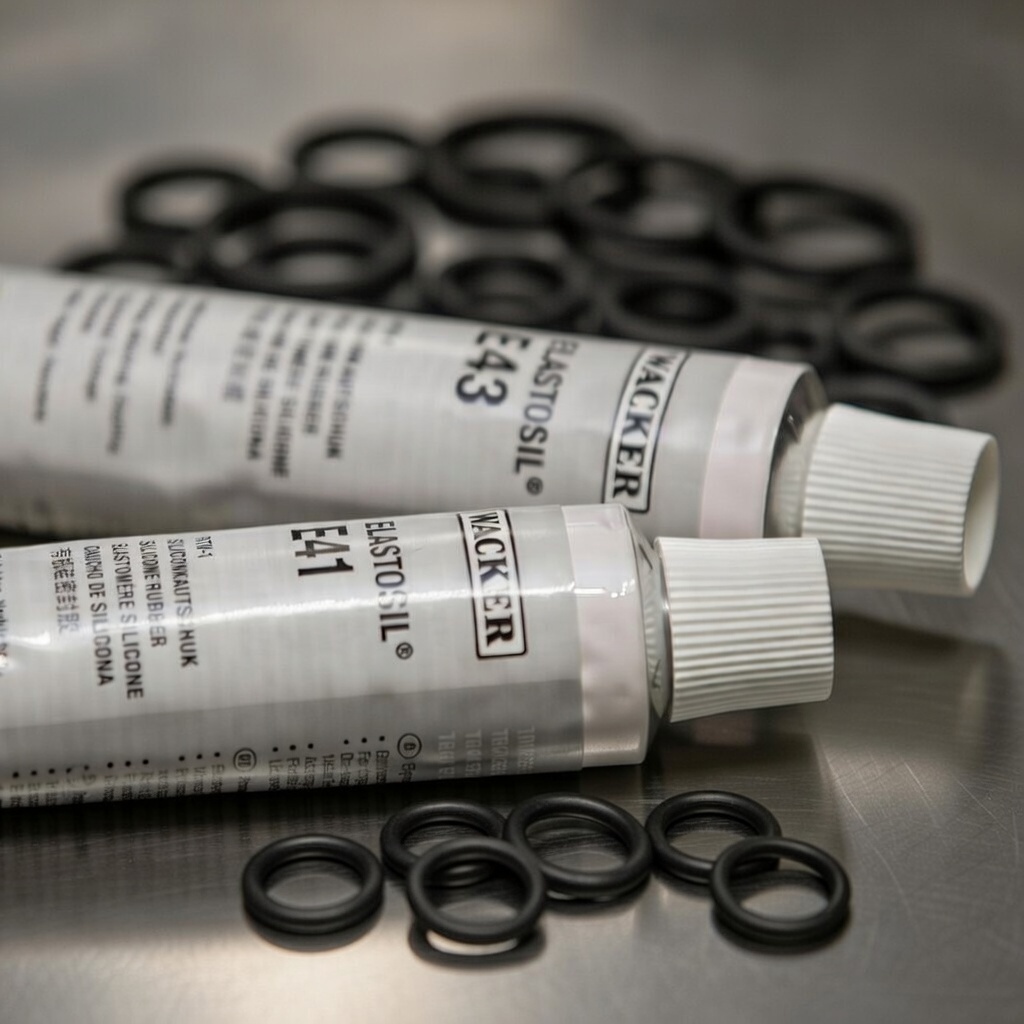
ELASTOSIL® E41, E43 or E43 N? Seemingly similar – completely different in practice. Which should you choose?
Read more

Minus a hundred degrees and back: why adhesive in orbit must not crack
In low Earth orbit, solar panels go through thousands of heating and cooling cycles every year. Prompted by November's tests of perovskite modules in orbit, this article explains why the differing expansion of the cell, the glass and the substrate loads the adhesive, and why its flexibility matters. Get to know the WACKER® RTV-S 691 A/B silicone for bonding solar cells.
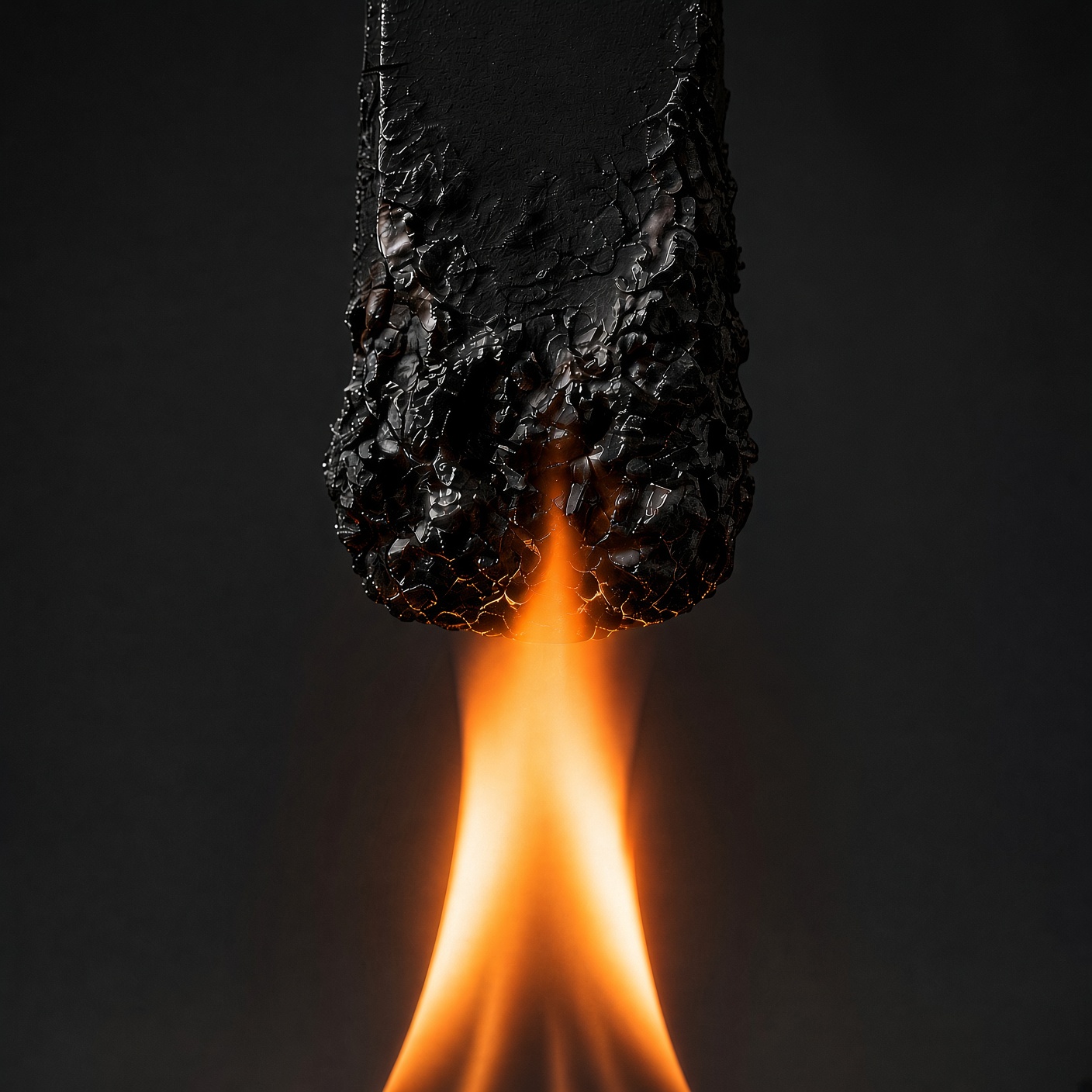
WACKER ELASTOSIL N 2189 vs N 2034 – Which RTV-1 Silicone Should You Choose for Applications Requiring UL 94 V-0?
ELASTOSIL® N 2189 or N 2034? Both products offer excellent flame-retardant properties, but they differ in their characteristics and application behaviour. N 2189 is a stable, non-sag silicone designed for demanding sealing applications, while N 2034 stands out for its low viscosity and self-levelling properties. Find out exactly how these two materials differ and which one is better suited to the requirements of your specific application.
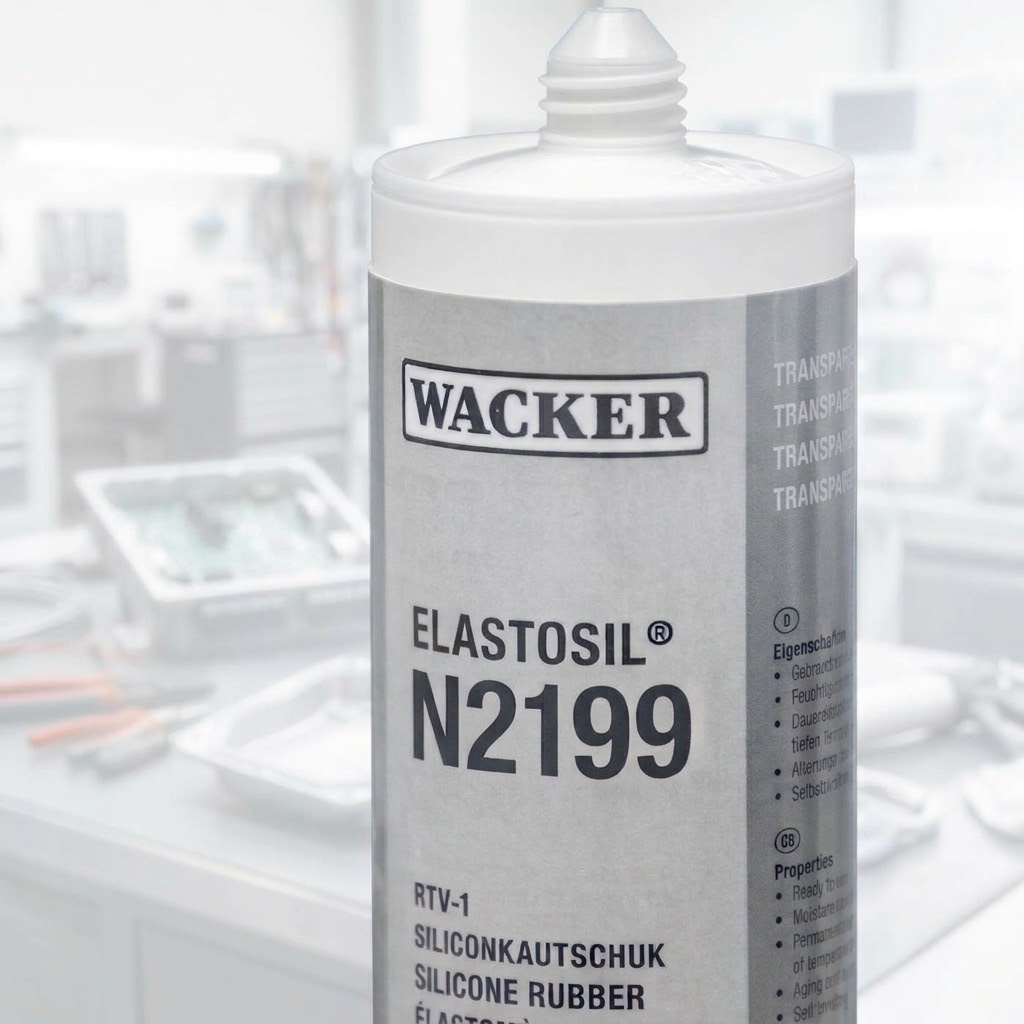
One product to replace many others. See how to optimise production with ELASTOSIL N2199
Our latest article explores the properties of the ready-to-use, one-part ELASTOSIL® N 2199 silicone. Read the full text to find out:
- Why meeting the stringent MIL-A-46146 standard is a guarantee of reliability in all conditions.
- How the acid-free, completely neutral (non-corrosive) formula protects delicate electronics from corrosion.
- How much time and operational costs you will save thanks to excellent primerless adhesion, which requires no prior surface priming.
- Why full stability in extreme temperatures (from -45°C up to +180°C) is the key to reducing service costs.
Replace dozens of specialised products with one proven solution.
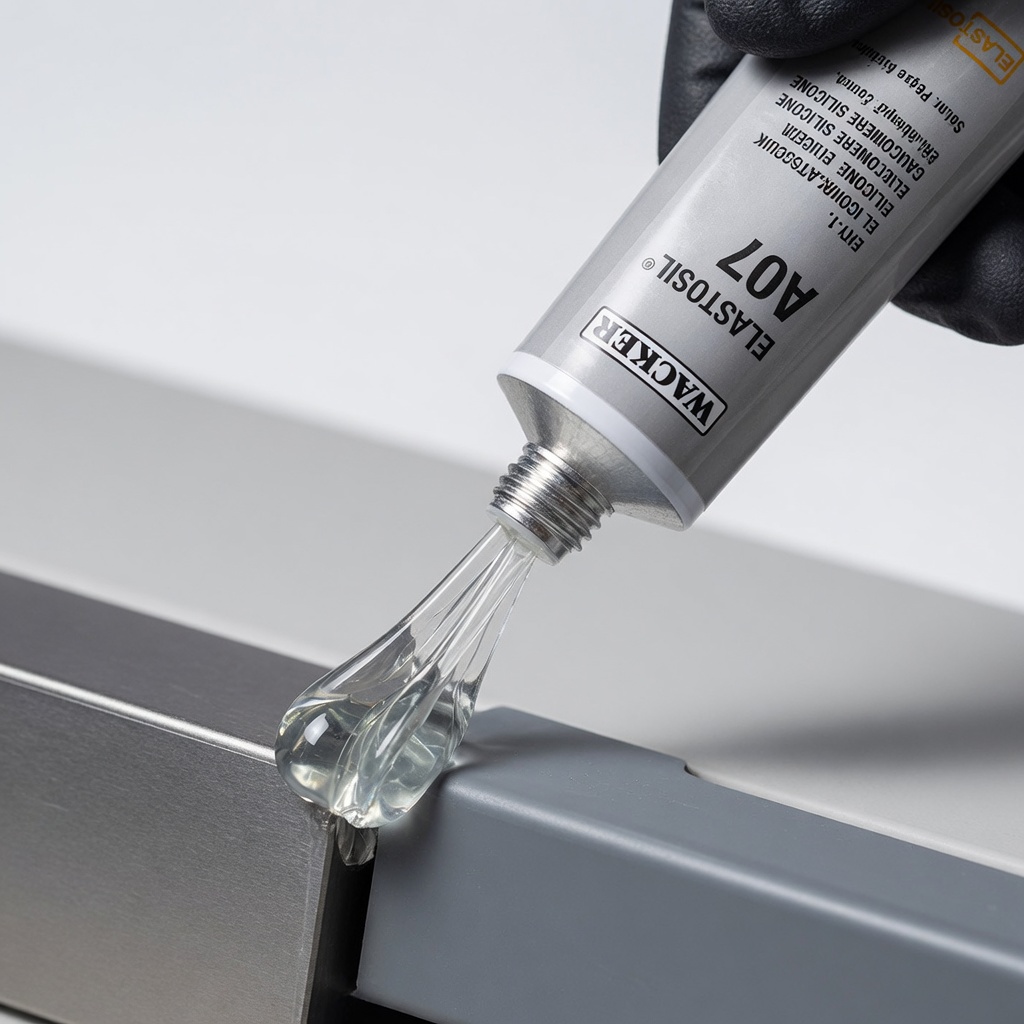
Versatility in the Industry: Where Does ELASTOSIL A07 Excel?
Are you looking for a reliable sealing and coating material for demanding conditions? Discover ELASTOSIL® A07 TRANSLUCENT – a versatile silicone dispersion that remains flexible in extreme temperatures ranging from -40°C to +180°C. Thanks to its excellent primerless adhesion and flowable consistency that makes application easy, this product is perfectly suited for the HVAC industry, among others. Learn how to achieve the perfect silicone coating step by step and fully unlock the potential of this solution in your project.
Read the full article to learn more. If you are interested in purchasing, please feel free to contact us!
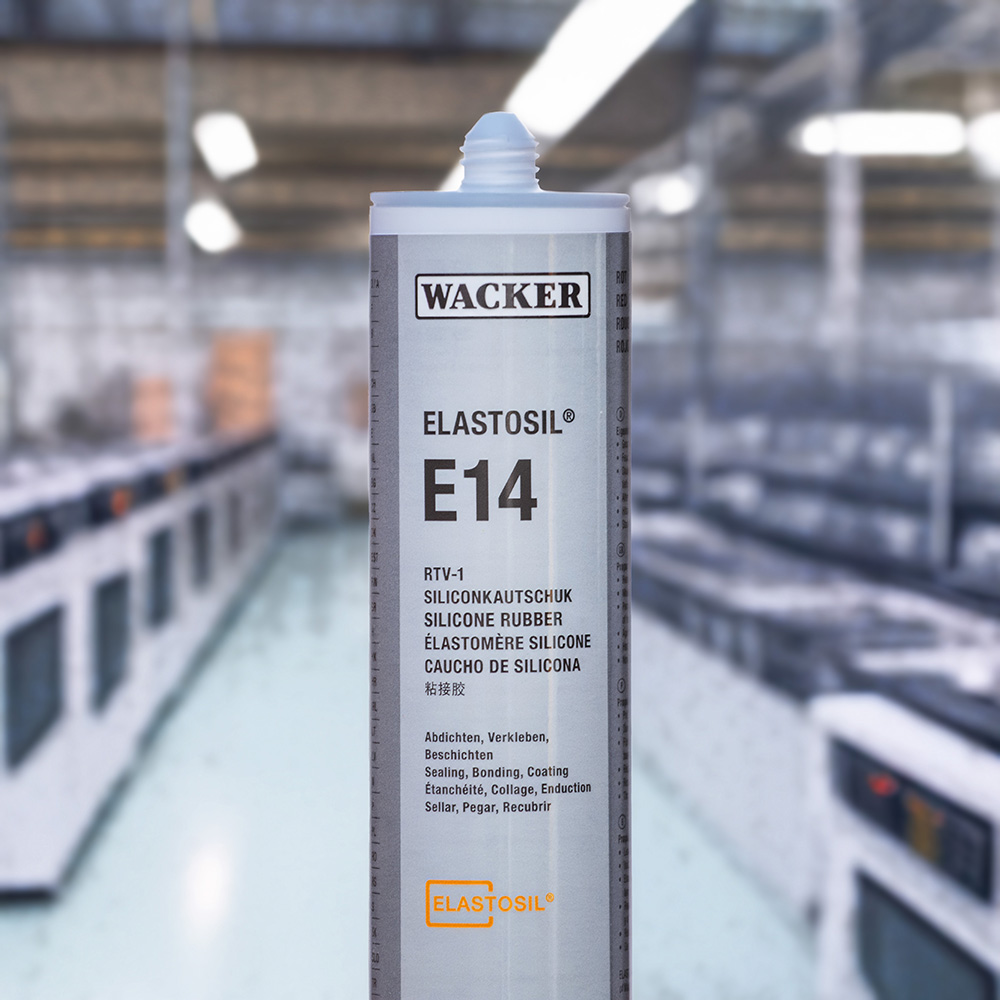
Elastosil E14 – a professional alternative to high-temperature silicone sealants for demanding applications
Elastosil® E14 is a high-temperature RTV-1 silicone adhesive designed for use in demanding industrial environments. With heat resistance up to 250°C, a dense, paste-like consistency, and excellent adhesion to metals and glass, it is commonly used as a replacement for products such as DOWSIL™ 732 (Red), Momentive RTV 106, Loctite® SI 596, as well as standard red high-temperature silicone sealants.
Unlike many commonly used sealants, Elastosil E14 does not slump on vertical surfaces, retains its elasticity after curing, and provides a stable, durable bond even under intensive thermal cycling. It is the solution of choice wherever reliability, consistency, and long-term performance are essential.
ELASTOSIL E43 – when standard solutions stop working
Not every silicone is the same. In demanding industrial and electronic applications, the differences between materials become apparent very quickly — especially where durability, adhesion, and resistance to operating conditions matter most.
In this article, we take a closer look at ELASTOSIL E43 — a specialised RTV-1 silicone adhesive that, thanks to its fluid consistency and exceptional adhesive properties, is often chosen where other solutions fall short. In practice, it is a material capable of taking on the role of several different products, simplifying processes and increasing the reliability of bonded joints.
If you want to learn why E43 is regarded as one of the strongest solutions in its class, where it performs best, and what sets it apart from standard silicones — we invite you to read the full article.
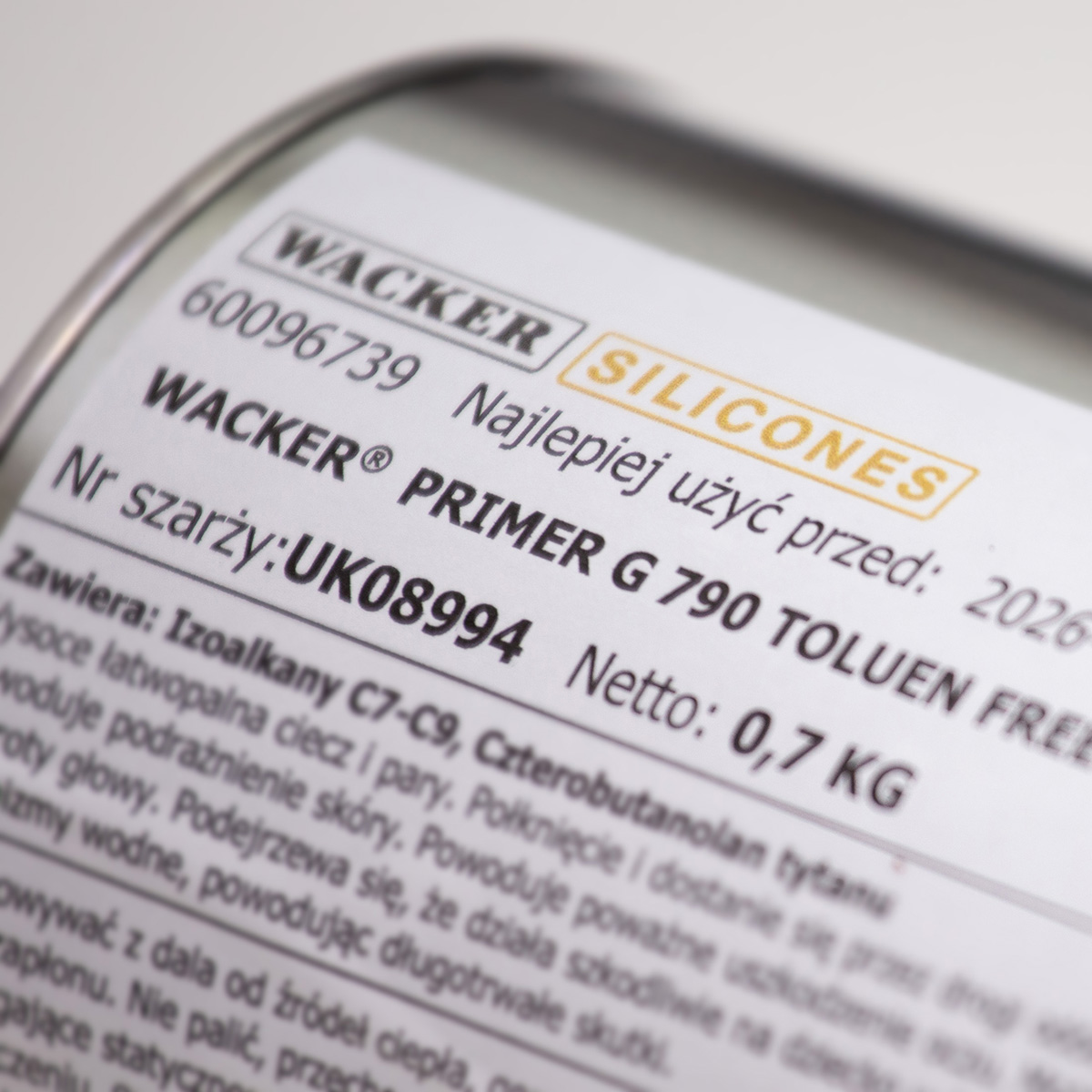
Primer G 790 – when to use it and how to apply it correctly
Primer G 790 should be used whenever an RTV-2 or LSR silicone has to bond permanently to a substrate and retain its adhesion throughout its service life. It is especially recommended for potting electronics, moulding silicone parts and applications exposed to moisture, heat and vibration. It is not necessary, however, where the silicone is meant to remain removable or serve purely as a protective layer without adhesion.
Correct application starts with thorough cleaning and degreasing of the surface, followed by a very thin, even coat of primer applied by brush, spraying or dipping. After application, allow 30–60 minutes for the solvent to evaporate completely before applying the silicone. Used according to these rules, G 790 significantly improves bond durability and the stability of the entire process.
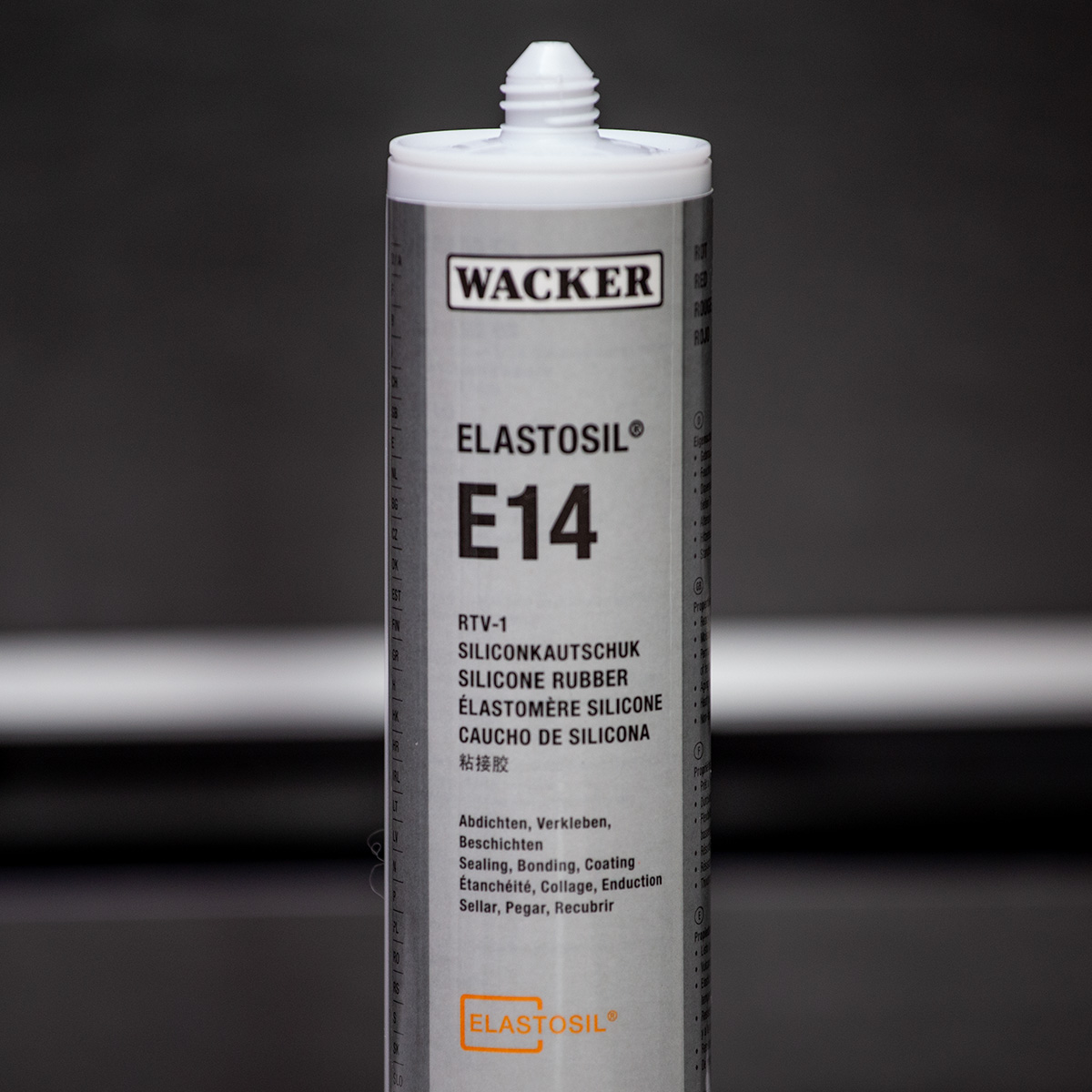
ELASTOSIL® E14 RED – the silicone that isn't afraid of heat
E14 is an RTV-1 (one-component) silicone designed for applications where other materials fail. It withstands continuous thermal load up to approx. +200°C while retaining its elasticity, adhesion and resistance to ageing. Its thixotropic consistency prevents sagging, making it ideal for precise sealing of ovens, heating appliances, electrical modules and components exposed to vibration.
Compliant with MIL-A-46106, it delivers durability and safety in demanding industrial applications.
If you need a reliable sealant for high-temperature service, E14 RED is one of the safest choices.