

In low Earth orbit, solar panels go through thousands of heating and cooling cycles every year. Prompted by November's tests of perovskite modules in orbit, this article explains why the differing expansion of the cell, the glass and the substrate loads the adhesive, and why its flexibility matters. Get to know the WACKER® RTV-S 691 A/B silicone for bonding solar cells.

Minus a hundred degrees and back: why adhesive in orbit must not crack
Read more
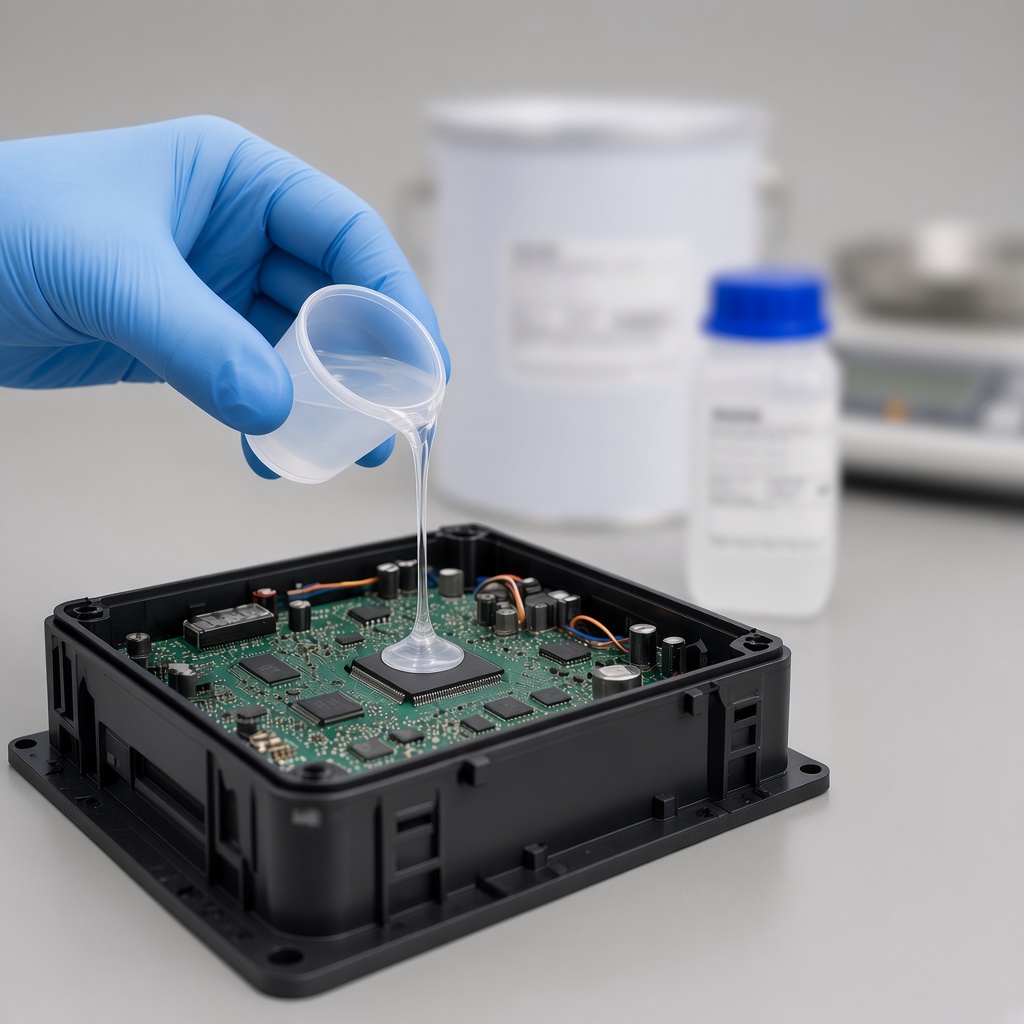
Which ELASTOSIL RT should you choose: RT 601, RT 602, RT 604, RT 607, RT 625 or RT 675?
Not every silicone potting compound solves the same problem. ELASTOSIL RT 607 A/B combines flame retardancy with electrical engineering and railway applications; ELASTOSIL RT 601 A/B and ELASTOSIL RT 604 A/B keep encapsulated components visible, while ELASTOSIL RT 602 A/B is a general-purpose light-grey encapsulant. Where tear resistance matters more, take a closer look at ELASTOSIL RT 625 A/B; where heat conduction is the priority, consider ELASTOSIL RT 675 A/B. We compare properties, mixing ratios and working times, then explain how to prepare a potting trial while avoiding the most common mistakes.
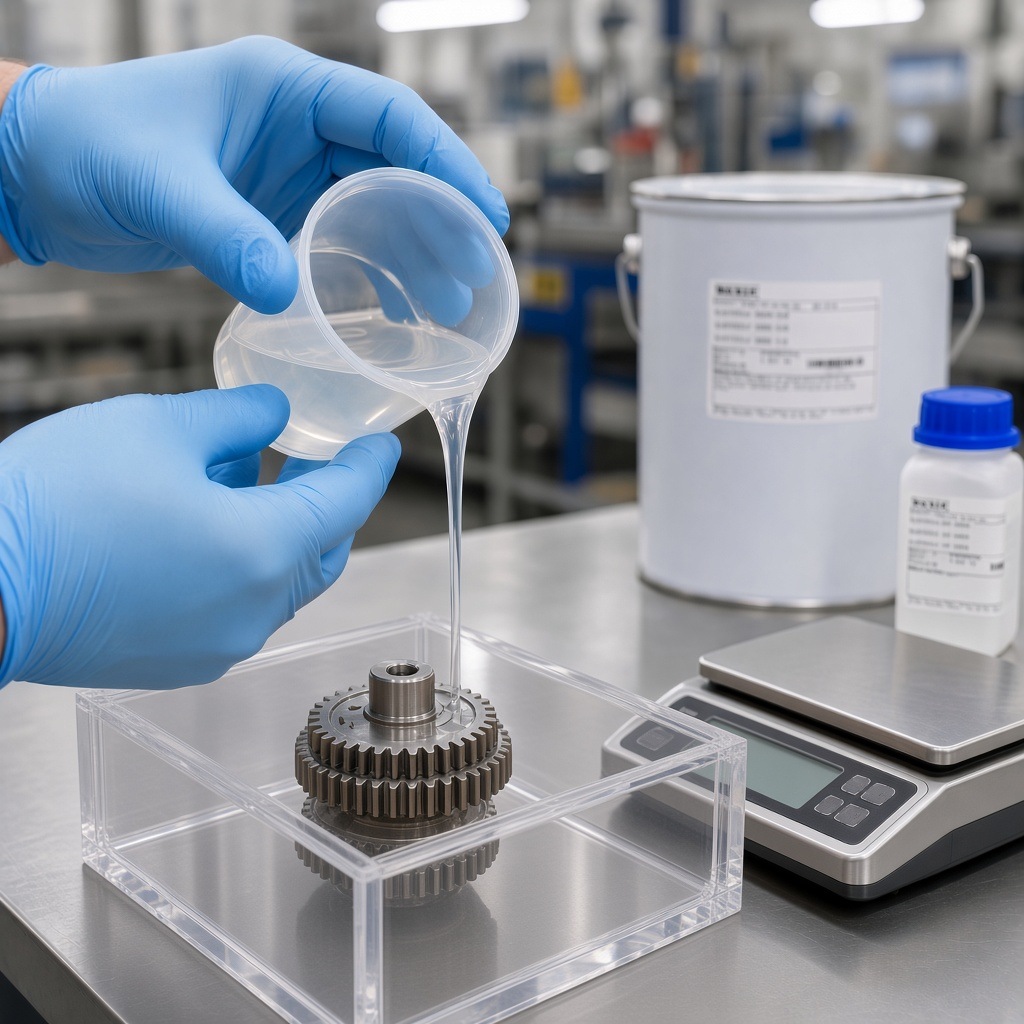
Silicone Mould with ELASTOSIL VARIO: Choosing Hardness and Catalyst
The WACKER ELASTOSIL VARIO system consists of two silicone bases and two catalysts that combine like building blocks. The soft ELASTOSIL VARIO 15 and the harder ELASTOSIL VARIO 40 let you set mould hardness anywhere from 15 to 40 Shore A, while the CAT VARIO (normal) and CAT VARIO-F (fast) catalysts set the working pace from 2 to 150 minutes. Here is how to choose the right combination and make a silicone mould step by step.
Potting Electronics: Silicone Gel or RTV-2 Compound?
Potting electronics is a long-term decision: the compound flows into every gap and stays with the components for the life of the device. Before you open the can, answer two questions: will you ever need to get to the components again, and does the circuit run hot? That decides whether you reach for a soft silicone gel or a flexible but solid RTV-2 potting compound. In this guide we compare WACKER SilGel 612 and SilGel 613 gels with the ELASTOSIL compounds RT 601, RT 604, RT 622, flame-retardant RT 607 and thermally conductive RT 675. We look at how they cope with moisture and vibration, whether you can dig a faulty component out of them, and how much stress they put on fine bond wires, sensors and solder joints during temperature changes. We show why a standard compound conducts heat only slightly better than plastic and when it pays to spend more on the filled RT 675. We have gathered mix ratios (1:1, 9:1, 10:1), pot life, viscosity and cure times at room temperature and in the oven in one place, so you know right away which compound will flow into a narrow gap and which needs degassing. A separate section covers inhibition – the most common cause of a tacky, uncured layer next to the PCB – and the materials to watch out for. We also explain what UL 94 V-0 really means and why “self-extinguishing” is not the same as “non-flammable”. We also advise when a clear compound lets you keep LEDs and components visible, how to match viscosity to narrow gaps and densely populated boards, and how to use additives to shorten or extend pot life when you pot larger batches. At the end you will find typical applications, a practical selection checklist and answers to the most common questions – all in plain language, from the perspective of someone who has potted more than a few boards.