English €
Open search engine
Search
Close search engine Clear Search
Products in the cart: 0. See details
Your cart is empty

Entries tagged "primers"

Post categories

Post categories

Tags

Tags

Post categories

Post categories

Tags

Tags

ELASTOSIL® AUX G 3242 vs G 3243 – Which Primer for HCR Silicone Rubber Should You Choose? Comparison of Solids Content, Viscosity and Application Practice

With the two primers from the ELASTOSIL® AUX series – G 3242 and G 3243 – excellent adhesion of HCR silicones to metal, ceramics or glass can be achieved, yet they differ enough that the choice of one over the other can determine the quality of the bond and the convenience of application. One has only 7 % solids content and a viscosity like water, the other as much as 23 % and is noticeably thicker. This is not a technical detail – it is a concrete decision about layer thickness, application method and the final strength of the joint.

In the full comparison you will find practical guidance on when to choose the low-viscosity version and when the concentrated one, how to properly prepare the substrate, how much time to allow for solvent evaporation, and why it is sometimes worth heating the primed part. If you work with peroxide-cured silicone elastomers, this text will enable you to select the primer consciously instead of relying on chance.
Read more

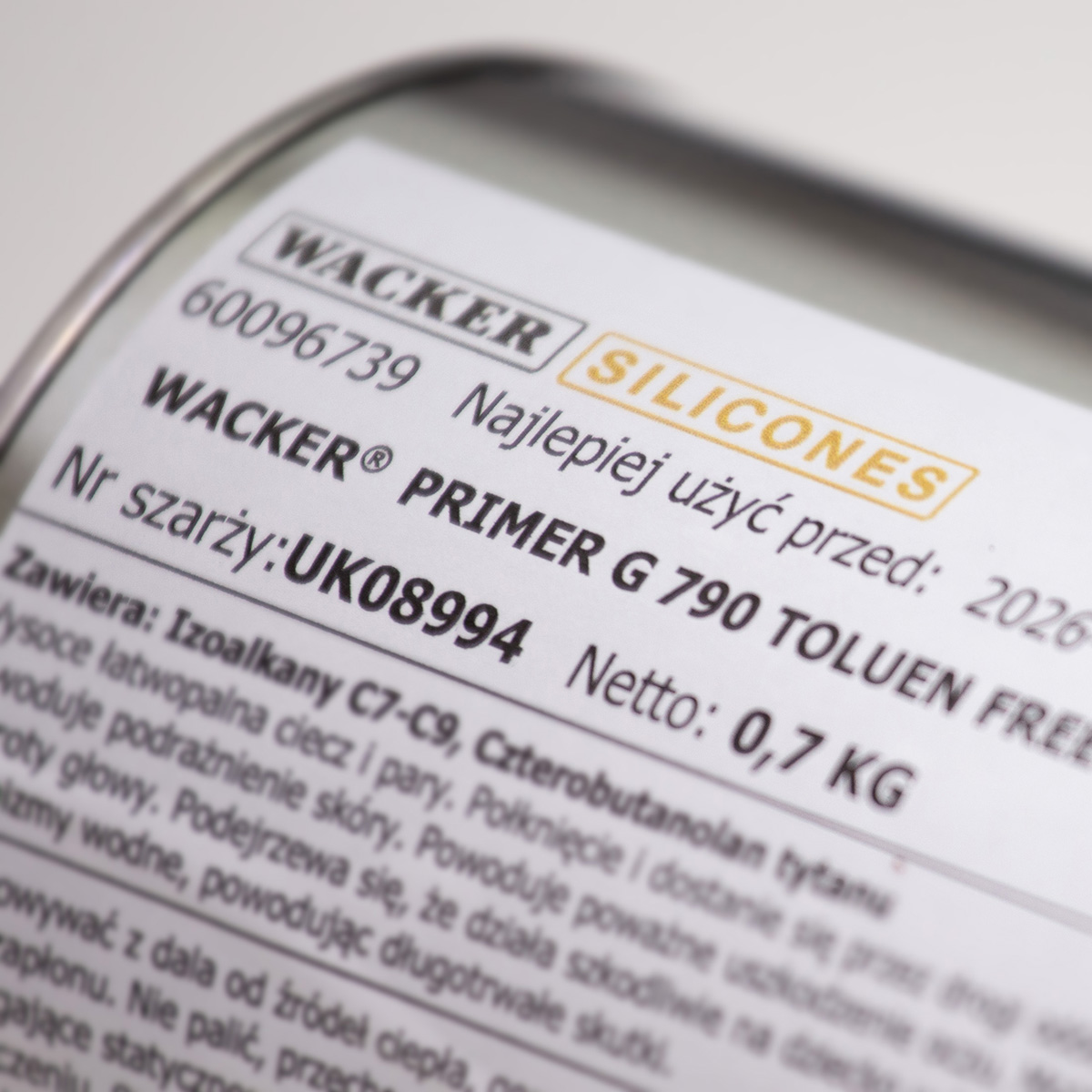
Primer G 790 – when to use it and how to apply it correctly

Primer G 790 should be used whenever an RTV-2 or LSR silicone has to bond permanently to a substrate and retain its adhesion throughout its service life. It is especially recommended for potting electronics, moulding silicone parts and applications exposed to moisture, heat and vibration. It is not necessary, however, where the silicone is meant to remain removable or serve purely as a protective layer without adhesion.

Correct application starts with thorough cleaning and degreasing of the surface, followed by a very thin, even coat of primer applied by brush, spraying or dipping. After application, allow 30–60 minutes for the solvent to evaporate completely before applying the silicone. Used according to these rules, G 790 significantly improves bond durability and the stability of the entire process.

Read more